
It’s 4:30 in the morning. Your guide knocks on your tent canvas with two gentle raps, and you hear the words “balloon day” spoken into the dark. You pull on your layers — the Mara at pre-dawn is genuinely cold — and step outside to find the sky still thick with stars and a cup of hot tea already waiting.
The drive to the launch site takes about twenty minutes. Your Land Cruiser headlights sweep across a lion sitting calmly beside the track, watching you pass with the absolute indifference of something that has never needed to hurry for anything. You roll down the window for a moment and just listen. The Mara at night is never quiet — there are hippos somewhere, frogs, a distant hyena. But it is the kind of quiet that exists between sounds, and it makes the silence of what comes next feel earned.
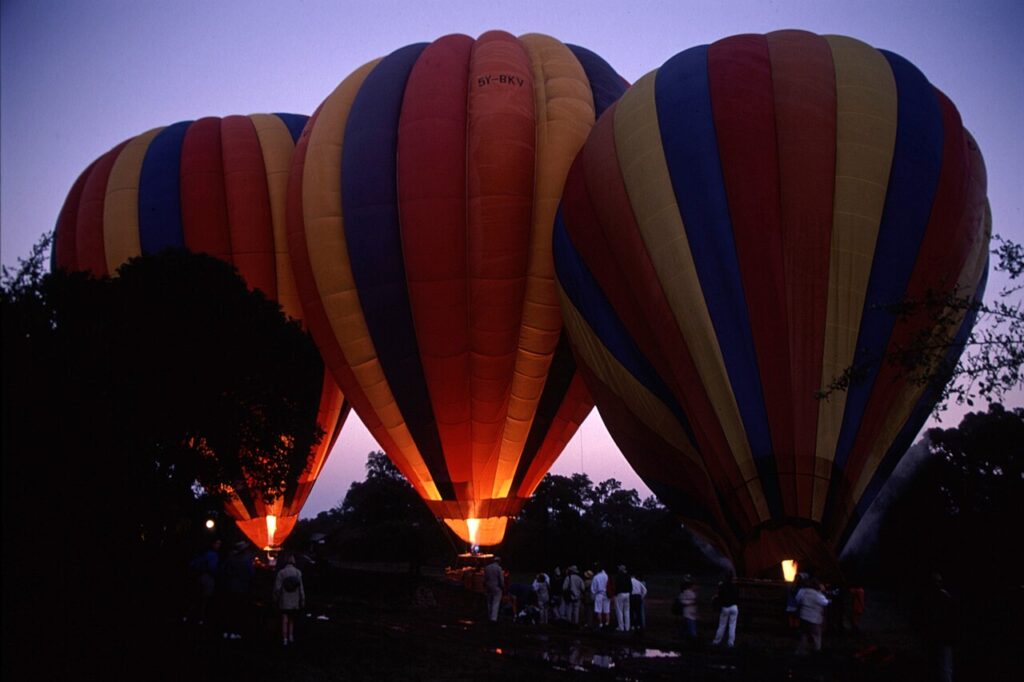
As you arrive, crew members lay out the balloon in the half-dark. It looks like an impossibly large cathedral of canvas stretched across the grass. Slowly, the envelope expands as powerful fans push air inside. Meanwhile, the sky begins to lighten at the eastern horizon.
Suddenly, the balloon stands upright and strains gently at its tethers. Now, the burners roar to life with a warm, orange glow. Finally, you climb into the basket and prepare for liftoff.
Then the burner fires. The balloon strains upward. The ground simply drops away beneath you.
And for the next hour, you will not find the right words for what you are seeing.
What a Maasai Mara Balloon Safari Actually Is
A hot air balloon safari over the Maasai Mara is not a gimmick. It is not a tourist tick-box. It is, by the testimony of an enormous proportion of the travelers who have done it, the single most memorable experience of a Kenya trip — and in a country built on extraordinary experiences, that is a meaningful statement.
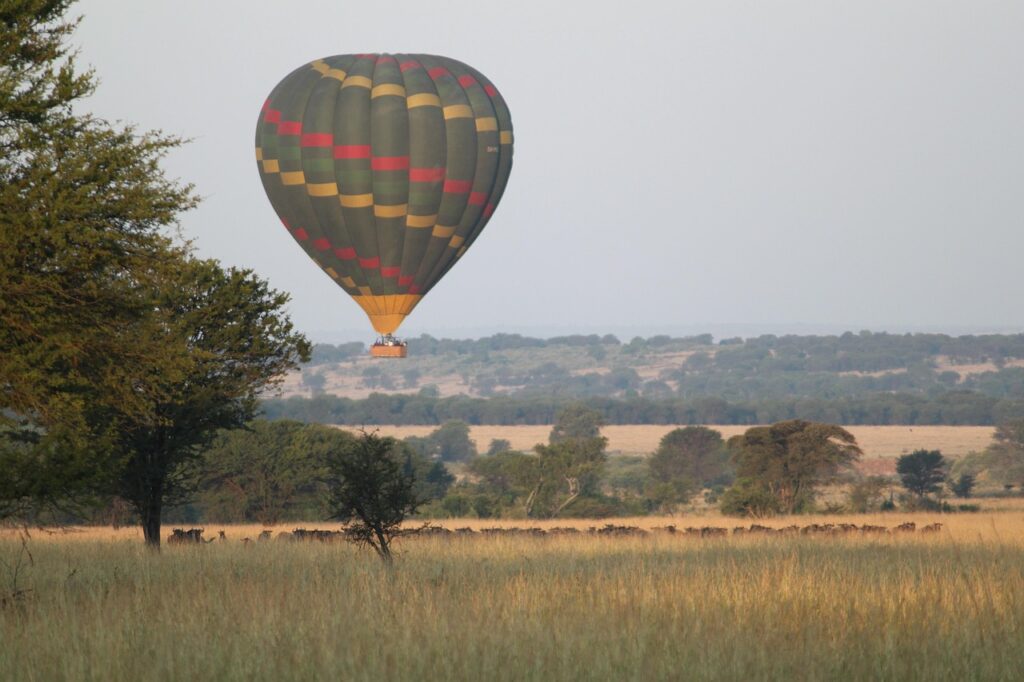
The flight typically lasts between 45 minutes and one hour, beginning at dawn and drifting with the prevailing wind across a section of the Mara ecosystem that your ground-based game drives can only partially cover. Altitude varies throughout the flight — your pilot can descend to within a few feet of the ground for intimate wildlife encounters, or ascend to 1,000 feet or more for a panoramic perspective that reveals the true scale of the Mara’s endlessly rolling plains. The distance covered during a typical flight is roughly 25–40 kilometers of reserve, depending on wind conditions — meaning you see more terrain in one hour than most ground-based safaris cover in a full day.
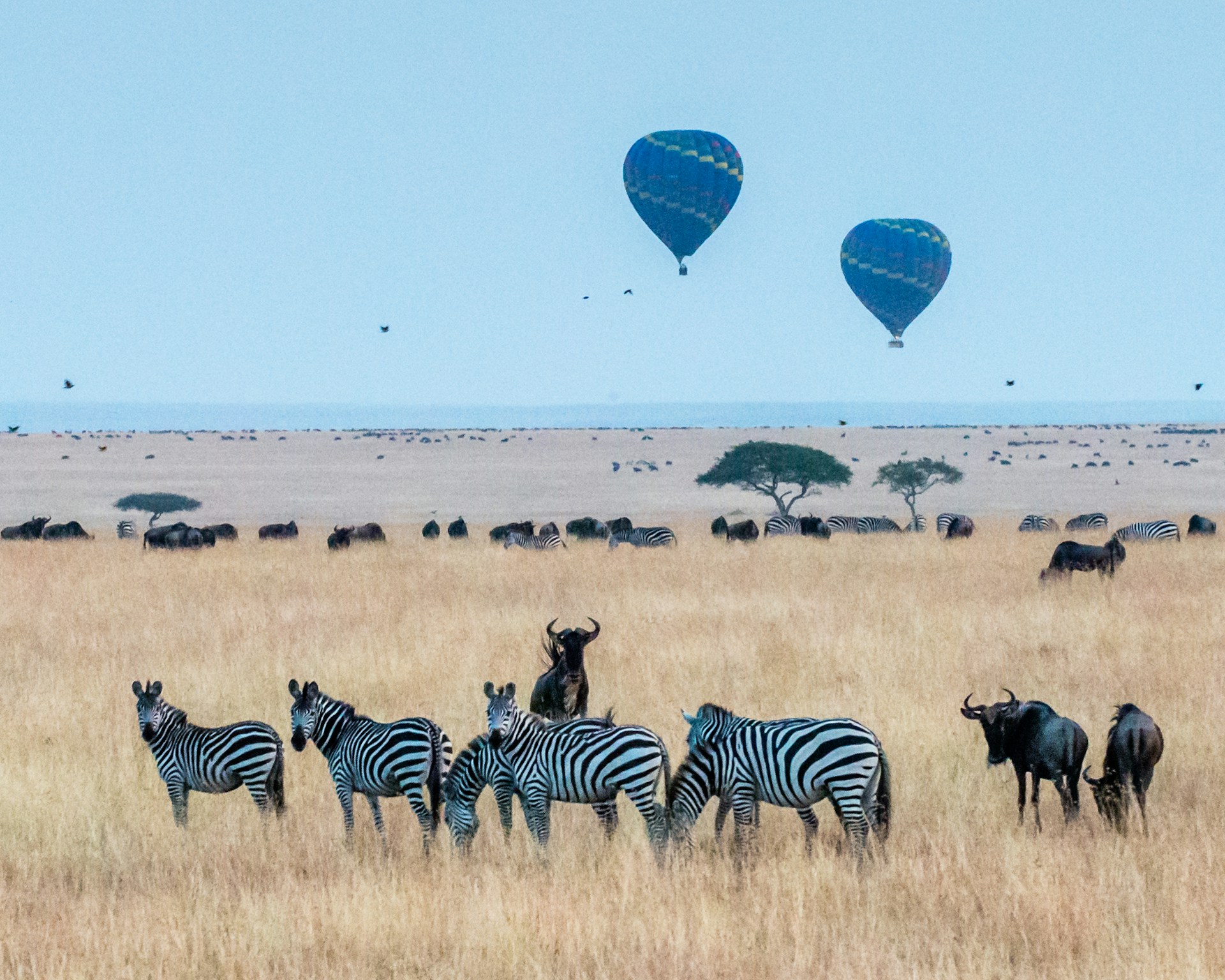
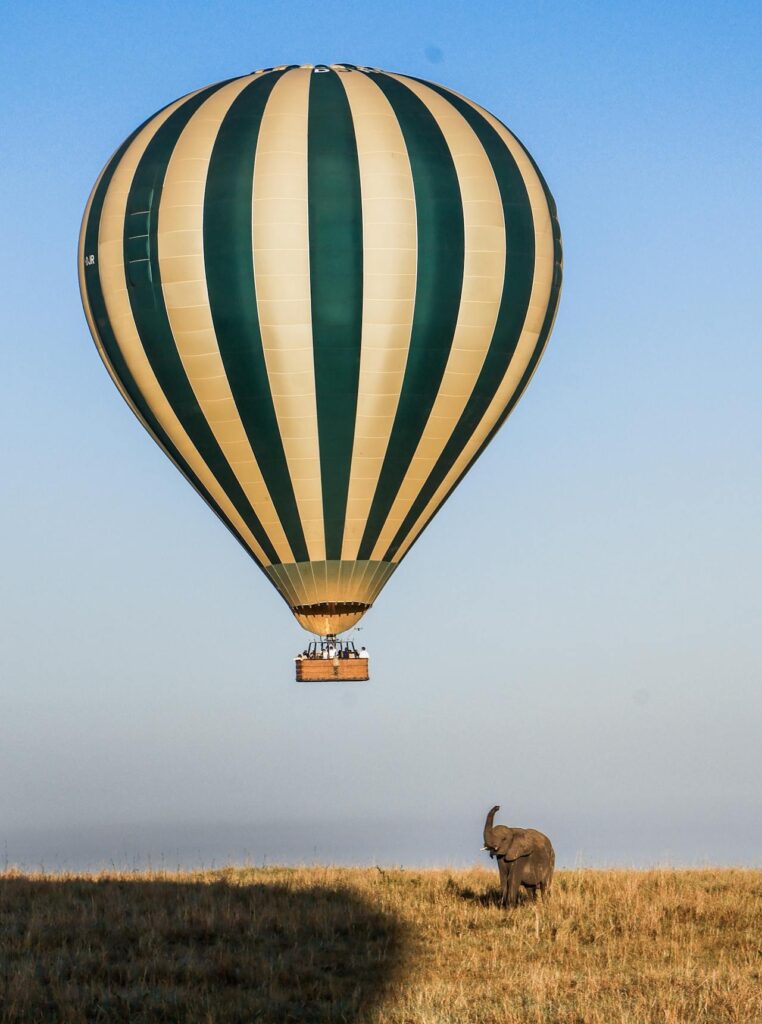
The silence is the thing nobody fully prepares you for. Between burner firings — which produce a thunderous, surprisingly warm roar directly above your head — there is an absolute stillness at altitude that you simply cannot achieve in any vehicle. You float. Animals below do not spook from a balloon the way they do from engines and wheels. A pride of lions stays exactly where it is. Elephants continue their morning walk. Hyenas barely look up. The balloon passes over them like a cloud, and the life of the Mara continues undisturbed beneath you.
The Full Experience: From Tent to Champagne
Pre-Dawn Pickup (4:30–5:00 AM)
Your lodge or camp arranges transfer to the launch site, typically 20–45 minutes from your accommodation depending on location. The early start is not negotiable — the balloon must lift before the day’s thermals develop and make controlled flight more difficult. This early drive is itself often productive: nocturnal animals are still active, and the Mara’s light in the last thirty minutes before dawn is extraordinary.
Arrival at the Launch Site
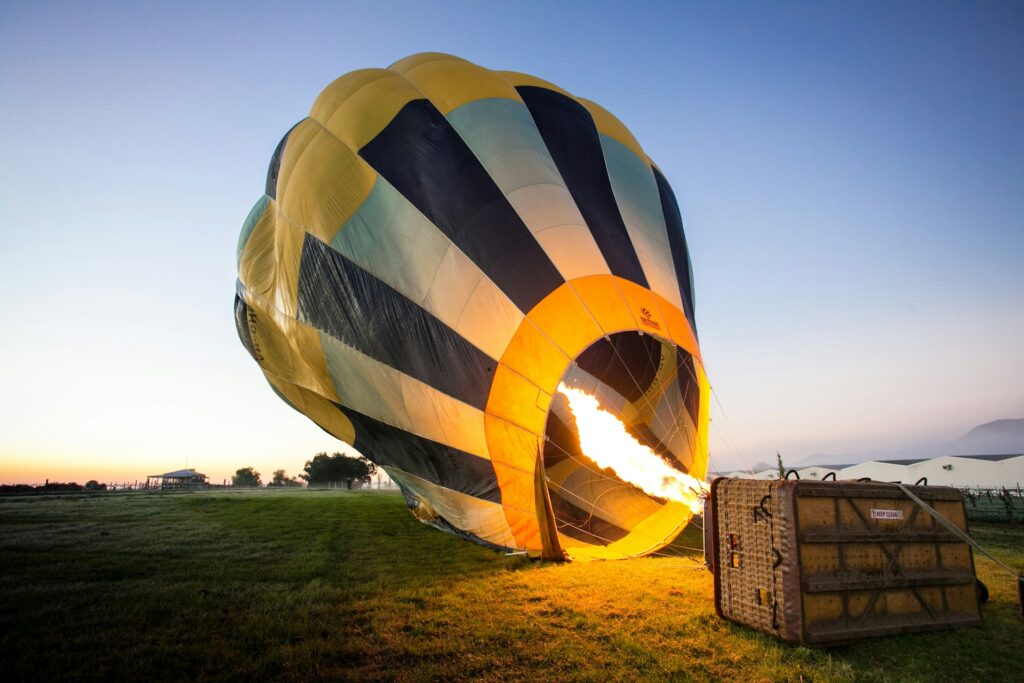
A warm welcome from the balloon crew and a cup of tea or coffee while you watch the inflation. This is genuinely spectacular — the balloon rises from flat canvas to a towering, lit structure against the dark sky in about fifteen minutes. A safety briefing from your pilot covers the basics: how to position yourself in the basket, what to expect on landing, and the signals you’ll use during the flight. Pay attention. It’s brief and practical.
The Flight (45–60 Minutes)
The basket holds between 8 and 16 passengers depending on the balloon size, divided into compartments. Ask your operator for a corner position when booking — you’ll have wider angles for photography and more personal space.
The ascent is a smooth, almost imperceptible rise. One moment you are on the ground; a few seconds later, the acacia trees are at eye level, and then below you, and then the whole sweep of the Mara is spreading out in every direction as the sun breaks over the eastern escarpment.
What you see depends on where in the Mara you’re flying and what time of year it is. Year-round residents include elephant, giraffe, zebra, wildebeest, topi, hippos in the river bends, and the big cats — lions and cheetahs in particular are commonly spotted from the air because the high vantage point reveals them lying in grass that would conceal them from a vehicle. Leopards are harder — they tend to stay in riverine forest — but not impossible.
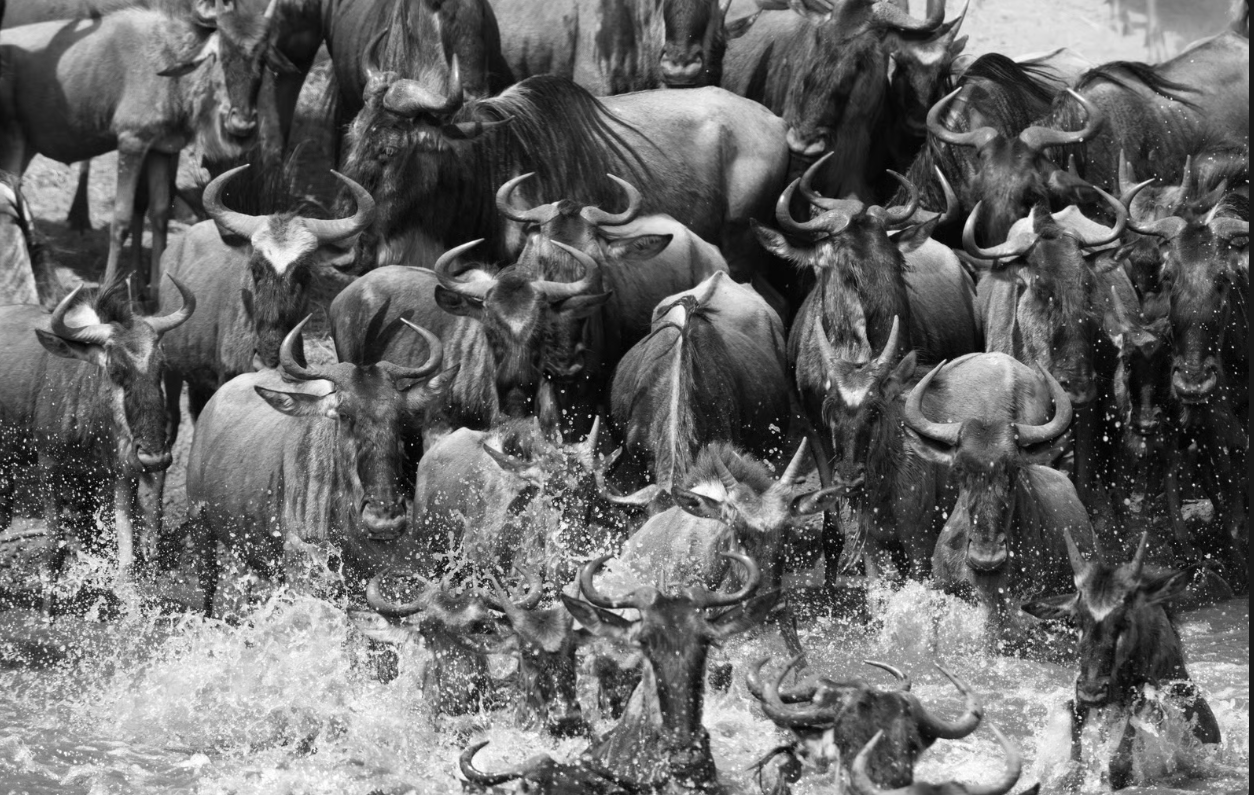
During the Great Migration (July–October), the aerial perspective becomes something else entirely. From above, you understand the scale of the movement in a way that ground-level simply cannot convey. Columns of wildebeest stretching to the horizon. The Mara River’s crossing points dense with animals. The controlled chaos of predators moving along the edges. It is one of the great natural spectacles of the world viewed from the only perspective that shows you all of it at once.
Landing
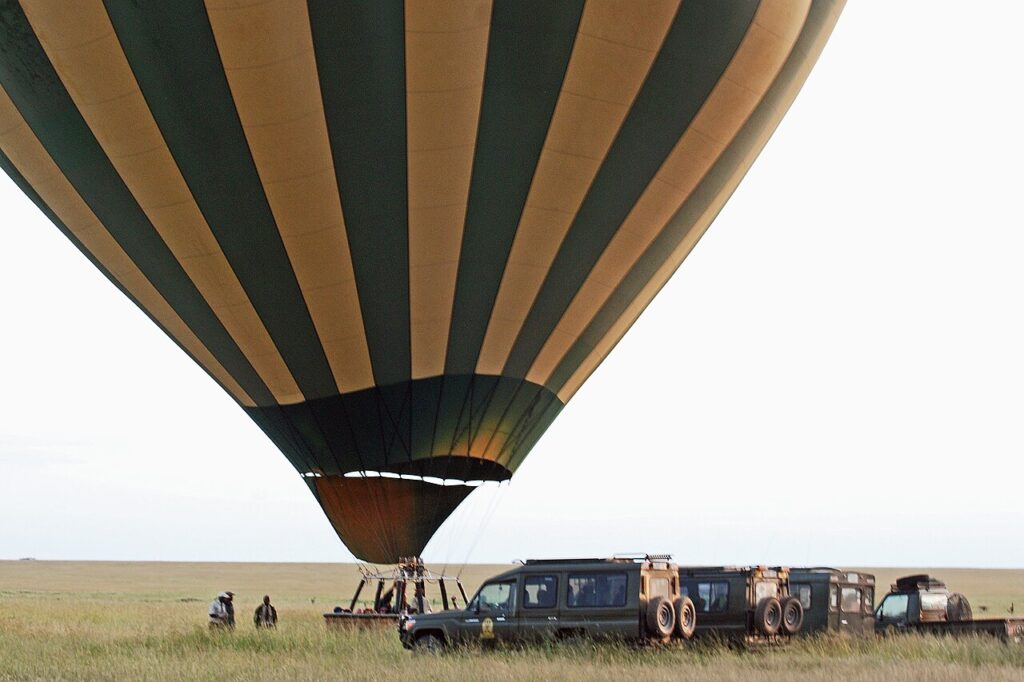
Balloon landings vary. In optimal conditions, it’s a gentle, almost soft touchdown. In stronger wind, the basket may drag for a moment — exciting rather than alarming, and something your pilot will have briefed you on. Local Maasai tribesman in their vivid red shukas are often present at the landing zone, having tracked the balloon’s path across the plains. The sight of them against the open Mara at sunrise is, by itself, worth the early morning.
The Champagne Bush Breakfast
This is the part that surprises people who were expecting it to be a postscript.
The bush breakfast is a full sit-down affair, laid out on white linen on folding tables in the open savannah — wherever the balloon happens to have landed. There are no roads, no fences, no signs of infrastructure in any direction. Just the sound of the plains, the light warming across the grass, and a table set with silver cutlery, fresh flowers, champagne (or sparkling juice if you prefer), omelets made to order, fresh fruit, pastries, Kenyan coffee, and everything else that makes the whole experience feel thoroughly, deliberately civilized in the most uncivilized setting imaginable.
It typically runs for about an hour, and then a vehicle transfers you back to your camp or lodge, arriving before 10:30–11:00 AM — leaving you with a full afternoon game drive ahead if you want it.
How Much Does It Cost? The Honest Breakdown
Balloon safaris are one of Kenya’s most price-consistent experiences. Unlike accommodation, where costs vary enormously by season and operator tier, balloon safari pricing is set by the operators and changes modestly from year to year.
Shared group flights (up to 16 passengers): Current pricing from the two primary Maasai Mara operators — Governors’ Balloon Safaris and Balloon Safaris Ltd — runs in the range of $450–$580 USD per adult for a shared basket flight including the champagne breakfast. Some lodges price this at the slightly higher end during peak migration season. Child pricing (typically ages 7–15) runs lower than adult rates — confirm directly with your operator or booking agent.
Private charter flights: For couples, small families, or groups wanting an exclusive experience, private balloon charters are available from around $3,000–$4,500 USD for the whole basket. Divided among four to eight people, this can represent reasonable value for a profoundly private experience.
What’s included in the standard price: The flight, professional licensed pilot, pre-flight tea/coffee, the champagne bush breakfast, Kenya Wildlife Service flight permits, and the transfer back to your camp. What varies is whether reserve entry fees for the day are separately charged — confirm with your operator.
Why it costs what it costs: Balloon operations are logistically demanding. Each balloon has a limited operational lifespan of around 850 flight hours before replacement. The crew typically numbers six in the basket (pilot plus five passengers) plus a chase crew of ten or more who track and retrieve the balloon after landing. Specialist maintenance, licensed pilots, CAA Kenya regulatory compliance, insurance, and the full breakfast operation in a remote location — all of this sits behind a price that travelers regularly describe, in hindsight, as entirely justified.
The Two Primary Mara Operators
Governors’ Balloon Safaris
Governors’ Balloon Safaris pioneered hot air ballooning in the Mara in the 1970s and have been flying safely ever since. Operating from the launch site at Little Governors’ Camp in the Mara Triangle, Governors’ is widely regarded as the benchmark Mara balloon operator — the name that serious safari travelers associate with reliability, experienced pilots, and a flight path that runs along what many consider the best balloon route in the reserve.
Their equipment is built specifically for Kenyan conditions. Their pilots are drawn from international aviation backgrounds and are among the most experienced in the industry. If your accommodation is in the Mara Triangle area, Governors’ is the natural operator.
Balloon Safaris Ltd
The other long-established primary operator in the Mara, Balloon Safaris Ltd operates from multiple launch sites across the main reserve east of the Mara River. Their versatility makes them well-suited to guests staying in a wider range of camps and lodges in the reserve’s eastern sections. Both operators are CAA Kenya-licensed and deliver comparable experiences; the primary distinction is launch location and, consequently, which section of the Mara you fly over.
Adventures Aloft
A third operator with multiple launch sites across the reserve, Adventures Aloft is frequently used by tour operators working with a range of accommodation options. Worth considering for travelers whose camps are not optimally positioned for either of the two primary operators.
A practical note: You do not normally book directly with balloon operators. Your safari camp, lodge, or tour operator handles balloon bookings as part of your itinerary — they work with the appropriate operator for your accommodation’s location. Book through your trip organizer and confirm the reservation in writing.
Mara vs. Amboseli: Which Balloon Safari Is Right for You?
The Maasai Mara is not the only place in Kenya where you can take a balloon safari. Amboseli National Park, famous for its elephant herds and iconic Kilimanjaro backdrops, also offers balloon flights — and they are a genuinely different experience worth considering if your trip includes Amboseli.
Maasai Mara Balloon Safari
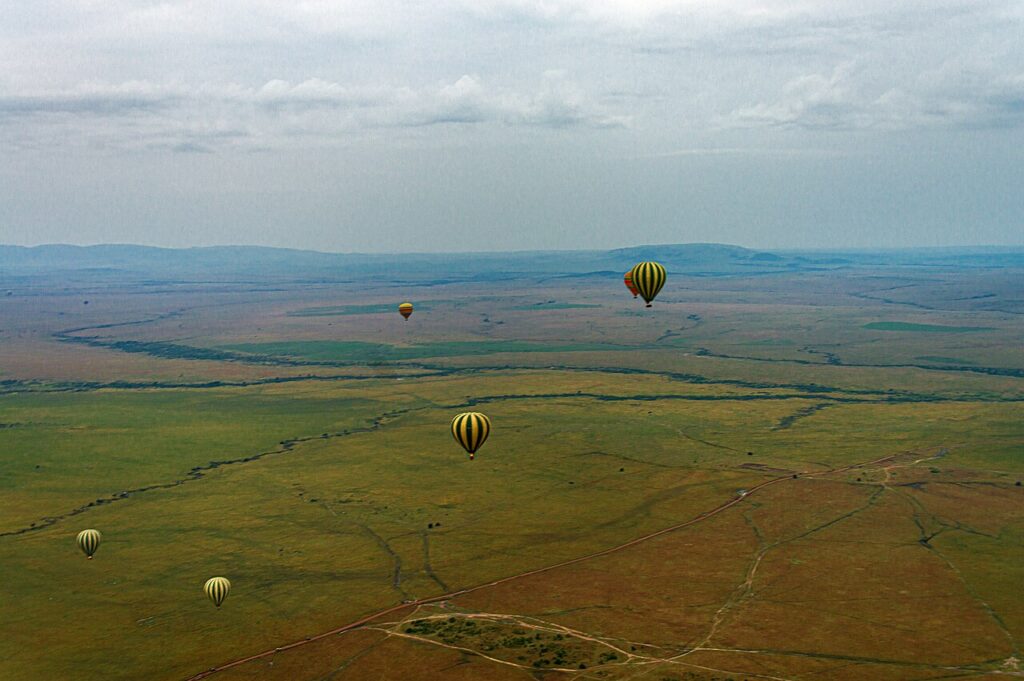
Best for: The widest variety of wildlife from the air, the dramatic river crossing landscapes (July–October), the iconic Mara plains, the full Great Migration experience, and the highest concentration of predators. The Mara’s open topography is exceptionally well-suited to balloon viewing — you can see for enormous distances in every direction.
Scenery: Golden savannah grasslands, snaking river bends, scattered acacia woodland, and the gentle folds of the Oloololo escarpment on the western horizon.
When: Year-round, peaking dramatically during the Great Migration (July–October).
Amboseli Balloon Safari
Best for: An experience that is perhaps the most photographically spectacular in all of Kenya — elephants beneath Kilimanjaro, seen from the air as the mountain catches the first light of dawn. If you are an elephant person or a landscape photographer, Amboseli from the air is transcendent.
Scenery: The vast Amboseli basin, wetlands fed by underground streams from Kilimanjaro, enormous elephant herds, and — weather permitting — the extraordinary visual of Africa’s highest peak filling the southern sky.
When: The clearest Kilimanjaro views occur January–March and June–October. The mountain regularly hides in cloud during the rainy seasons.
The honest comparison: For overall wildlife diversity and volume, the Mara is the stronger balloon destination. For sheer photographic and emotional impact — particularly if you get a cloud-free Kilimanjaro morning — Amboseli is unmatched. If your trip includes both parks, both flights, and your budget allows it: do both. There is no rule against loving two extraordinary things simultaneously.
Is a Balloon Safari Worth It? The Honest Answer
When travelers first encounter the price — and it is a significant spend in the context of a safari — the question of value comes up immediately. Here is the honest answer:
It depends on what you want from your safari.
If you are the kind of traveler who prioritizes maximizing wildlife sightings per hour, the same money spent on additional game drives would probably get you more total animal encounters. Game drives — particularly with an excellent guide in a private conservancy — are in many ways the richest way to experience the Mara.
If you are the kind of traveler who prioritizes perspective, silence, beauty, and moments that recalibrate your understanding of scale, the balloon is almost certainly the better investment. No game drive shows you the Mara the way a balloon does. Furthemore,no vehicle gives you the silence. No land-based experience puts you simultaneously above a herd of a thousand wildebeest while the sun rises over the escarpment.
The feedback from travelers who have done it is, in our experience, remarkably consistent: it is among the best things they have ever done. Not just in Kenya. Anywhere.
One caveat exists: the experience depends entirely on the weather. Pilots cancel flights for strong winds, rain, or poor visibility. If this happens, the standard policy offers a full refund or rescheduling. Please accept this outcome gracefully. After all, a balloon cannot fly safely in bad conditions. Ultimately, a cancelled flight is the only correct choice in those circumstances. Safety always remains the top priority for every crew.
The Science of the Silence — Why Wildlife Responds Differently to Balloons
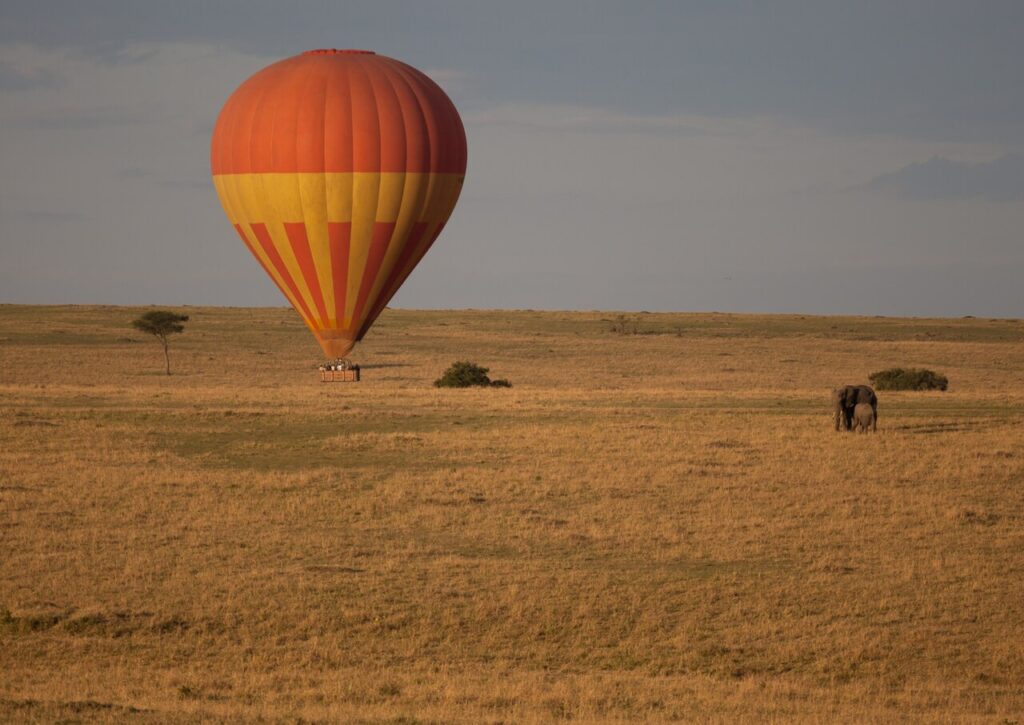
One of the defining qualities of a balloon safari — and one that photographs simply cannot convey — is the way animals behave beneath you. This is not incidental. It is rooted in how wildlife processes threat.
On a game drive, you arrive in a vehicle with an engine, exhaust smell, and mechanical noise. Even the best-behaved safari vehicle creates a sensory footprint that animals register and calibrate their response to. They tolerate it, habituate to it over time in parks with regular vehicle traffic — but they know you are there.
A hot air balloon is silent. It has no engine exhaust. It casts no shadow at altitude. The only sound it produces is the occasional blast of the burner, which fires upward and is masked by the balloon envelope itself before the sound reaches the ground below. To most animals, the balloon overhead is simply weather — a large cloud shape drifting with the breeze. They do not associate it with threat.
The consequence is wildlife behavior that is entirely natural and entirely unpoised. A lion pride you fly over at 200 feet is not performing tolerance for a nearby vehicle. It is simply being a lion pride — grooming, sleeping, watching the plains, completely indifferent to your presence above them. A herd of elephants moving along a seasonal watercourse continues its movement without deviation. A cheetah scanning for prey from a termite mound doesn’t even glance upward.
You are, for this hour, truly invisible. And the Mara you see from that invisibility is the Mara as it actually is.
The Balloon Safari for Couples and Honeymooners
It would be a missed opportunity not to address this directly: a hot air balloon safari over the Maasai Mara at dawn, followed by a champagne breakfast in the bush, is one of the most romantic experiences available on this planet. Full stop.
Many couples time their trip to enjoy a Maasai Mara balloon safari for an anniversary. In fact, others choose this experience for a honeymoon or milestone moment. The combination of elements feels almost unreasonably perfect. First, you enjoy the pre-dawn intimacy of a shared experience. Next, you witness the extraordinary visual spectacle of the Mara from the air.
Furthermore, the silence and the light create a magical atmosphere. Ultimately, the unhurried breakfast celebration provides the perfect conclusion. Indeed, these moments turn a simple flight into a lifelong memory. Consequently, this adventure remains a top choice for travelers seeking romance in Kenya.
Several operators offer the option of a private picnic breakfast rather than the group set-up — for couples who want complete privacy after landing, this upgrade converts the communal celebration into a table for two under a single acacia tree, with the plains entirely to yourselves.
If you are travelling to Kenya for a honeymoon or significant anniversary, build the balloon morning into your itinerary as an anchor experience. Book the private breakfast option if your budget allows it. And communicate the occasion to your operator at the time of booking — the Mara hospitality industry is very good at marking these moments with the attention they deserve.
Common Questions Answered Honestly
“What if I’m afraid of heights?”
This question comes up often, and the answer surprises most people: a balloon is one of the least vertiginous ways to experience altitude. You are in a basket with solid walls rising to chest height. You cannot see directly straight down without looking over the edge intentionally. The ascent is so smooth and gradual that there is no moment of sudden height awareness — the ground simply recedes gently. Many travelers who consider themselves genuinely afraid of heights complete balloon safaris without distress. That said, if severe height anxiety is a real concern, it is worth discussing with your operator honestly before booking.
“What if the balloon is cancelled?”
Operators will cancel flights for safety reasons — strong or unpredictable winds, rain, poor visibility. If this happens, the standard policy is a full refund or the option to reschedule to another morning of your stay. Accept this gracefully. A flight cancelled for conditions would have been a worse experience than no flight at all — the pilots are making the right call.
“What do I do if I have a medical condition?”
First, you must advise your operator fully at the time of booking. For example, you should mention any recent joint surgeries. Crucially, the landing requires a certain amount of physical stability. Next, consider your cardiovascular health. In fact, the altitude and cold can affect specific conditions.
Furthermore, most operators do not permit pregnant passengers to fly. Instead, you should plan your adventure for a later date. Ultimately, your travel health clinic provides the best advice on fitness to fly. Therefore, consult with a doctor before you finalize your plans. By doing so, you ensure a safe and enjoyable Kenya balloon safari.
“Can I eat beforehand?”
The basket can become warm from the burner, and some passengers do experience mild motion sensitivity — particularly on gusty mornings. Avoid a heavy meal before the flight. A light snack or tea/coffee is fine. The bush breakfast afterwards is generous enough to compensate.
“How many people will be in the basket?”
A standard shared flight carries up to 16 passengers divided into basket compartments. If this feels too crowded, ask about smaller basket options or private charter flights. The experience in a 16-person basket is still excellent — but a 6-person basket is noticeably more intimate.
Practical Details: Everything You Need to Know Before You Go
Who Can Fly
Most operators set a minimum age of 7 years — some require 8. Children under the minimum are not permitted in the basket. Pregnant women are advised not to fly. Passengers should be physically capable of standing for an hour and handling a potentially bumpy landing.
Passengers with significant mobility limitations or joint issues should advise their operator at the time of booking — climbing into and out of a basket requires some agility, and the operator can advise on feasibility.
What to Wear
The Mara at 5:00–6:00 AM is cold — typically 10–16°C (50–61°F). Dress in layers, with the knowledge that it will warm considerably as the morning progresses. A lightweight fleece or light jacket over your safari layers is ideal. Closed-toe shoes are required (not flip-flops or sandals). A hat is strongly recommended — the burner produces substantial heat directly above the basket. Neutral safari colors (khaki, olive, tan) rather than bright colors.
Photography
A balloon safari is one of the greatest photographic opportunities of a Kenya trip, but it requires some planning. Bring your telephoto zoom for wildlife shots. Bring a wide-angle lens or use your phone for landscape and aerial shots. A camera strap firmly attached is essential — you don’t want to drop anything. A small bag for lens changes that won’t fall over in the basket is useful. The light at dawn is genuinely extraordinary — blue and gold at the same time — and it will not last long. Have your camera settings dialed in before you lift off.
Booking Timeline
Book as early as possible — during peak Migration season (July–October), places on morning flights fill weeks or months in advance. For most other periods, two to four weeks’ notice is usually sufficient, but the prudent approach is to confirm at the time of your safari booking.
Adding a Balloon Safari to Your Kenya Trip
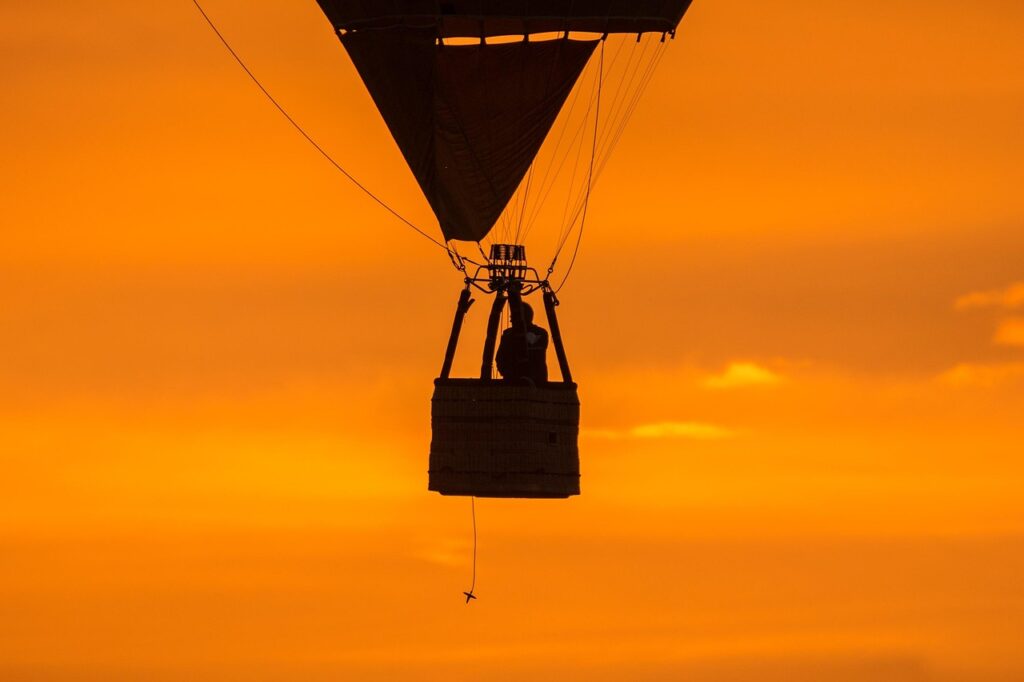
The balloon safari is best understood not as a standalone activity but as a morning within a broader Mara stay. The ideal structure: arrive at your Mara camp or lodge the day before your balloon flight, do an afternoon game drive to settle into the landscape, fly the following dawn, return for breakfast at camp, rest, and then do an afternoon game drive. This rhythm — ground one evening, air one morning, ground again the next afternoon — gives you the complete Mara experience from every possible vantage point.
Ready to add a balloon safari to your Mara itinerary? Enquire about the Maasai Mara packages with balloon safari here.
Related Articles
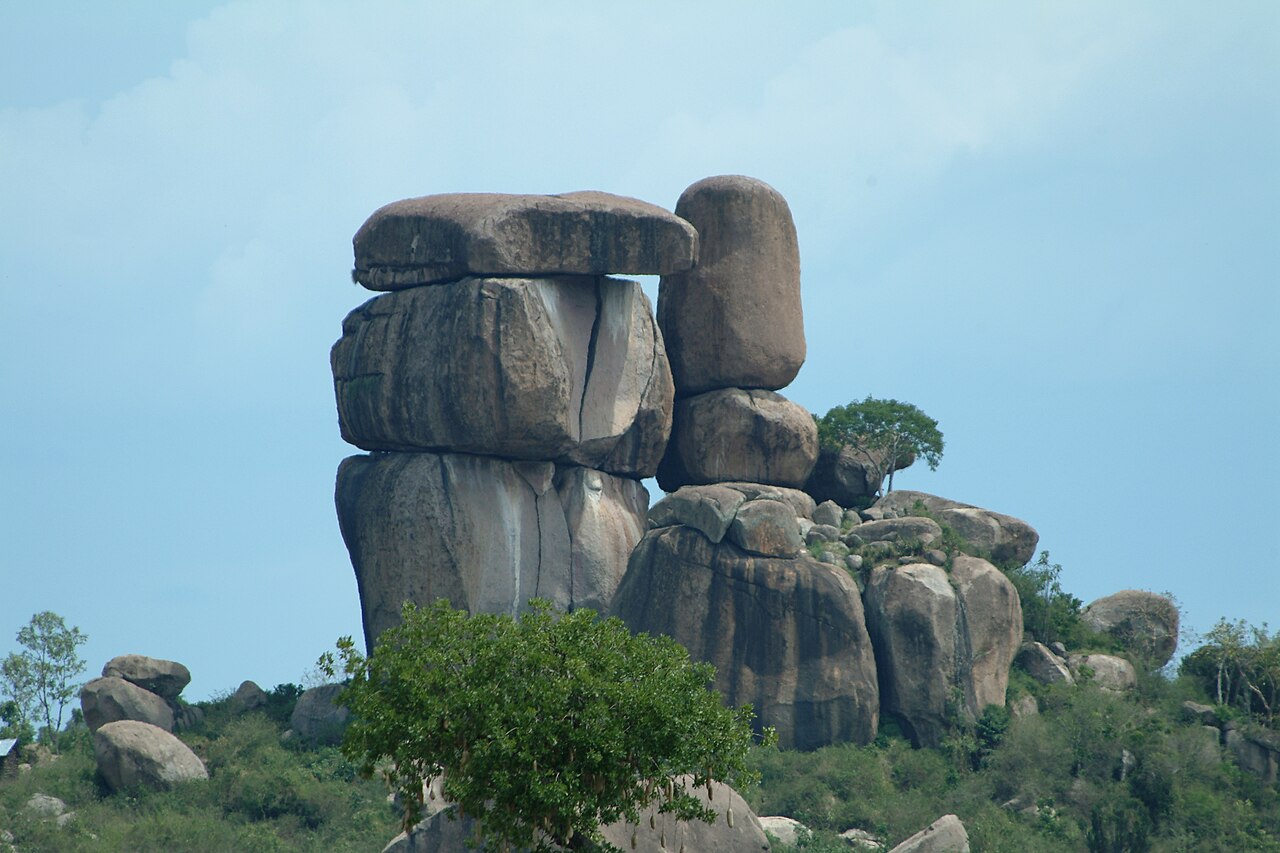
Kit Mikayi and the Crying Stone: Why Kenya’s Sacred West Deserves Your Attention
There is a rock formation about 30 kilometers west of Kisumu that has been pulling people toward it ...
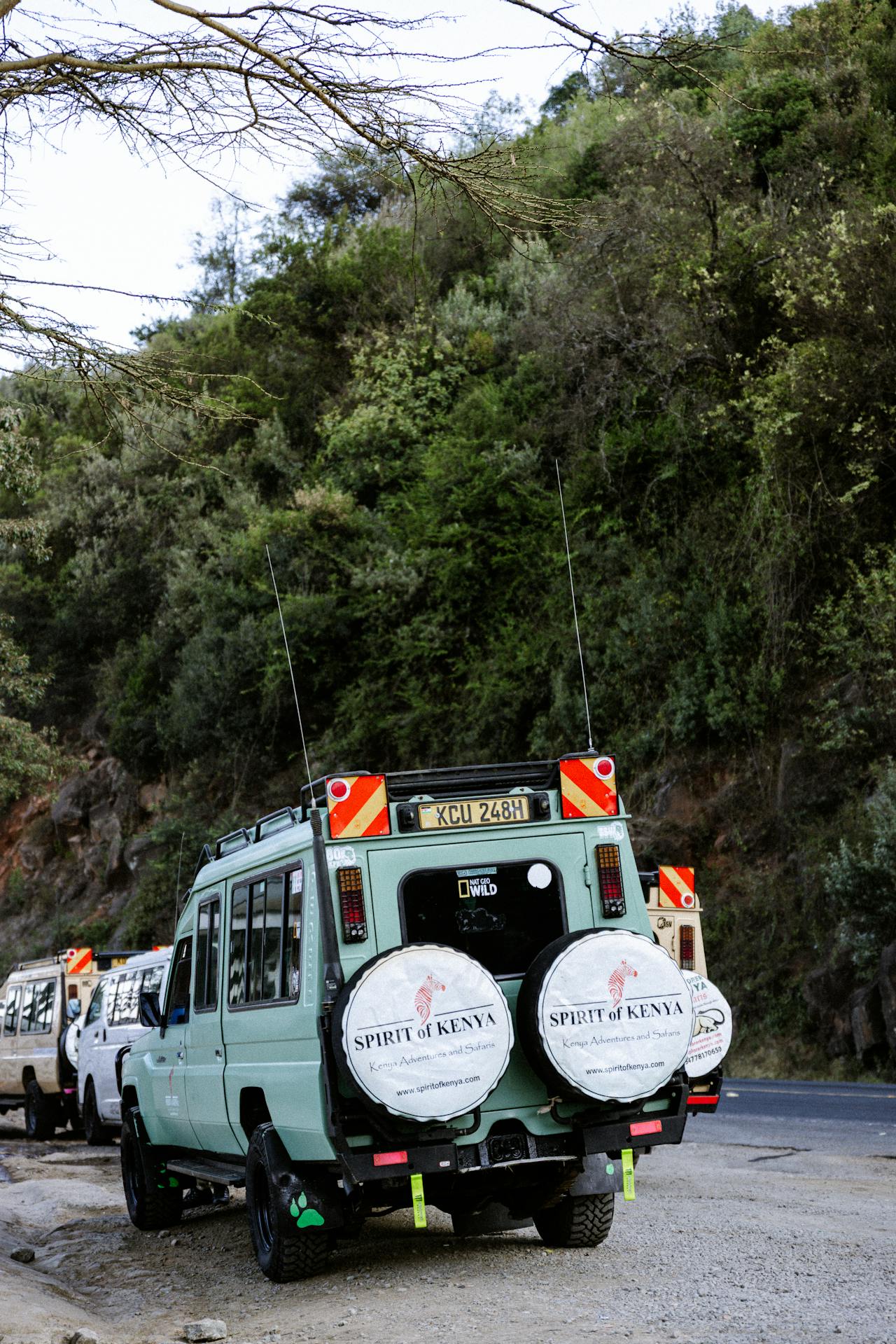
Before You Book Kenya, Read This First
Here’s the thing about Kenya: people book it wrong all the time. Not the safari itself — the e...
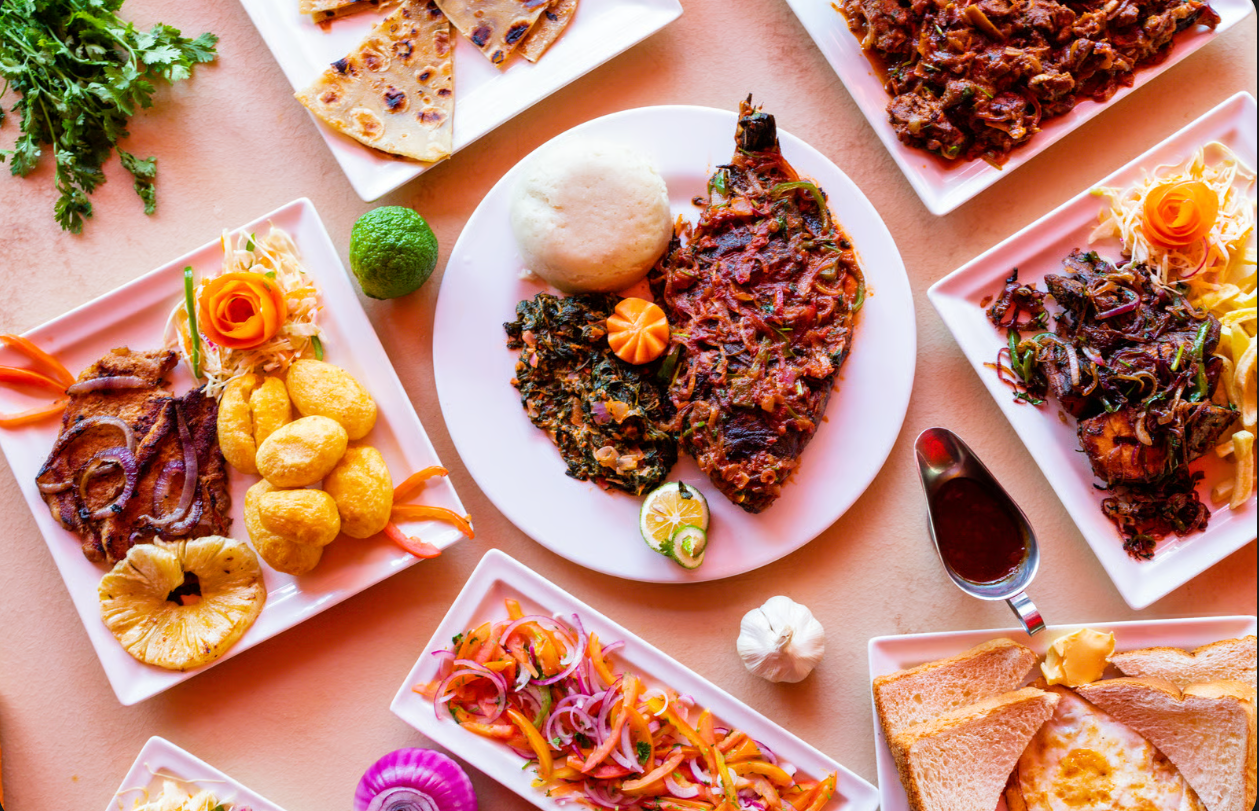
Nairobi Eats Different – Here’s Where the City Takes Its Meals
Nairobi is not just Kenya’s capital city – it is a living, breathing food map where cultures collide...
Wildebeest Migration: Why It Doesn’t Wait for No One
Every year, without a calendar, without a forecast, and without a single human cue, over 1.5 million...