
Some travelers have already mastered the Maasai Mara. Perhaps they visited twice. Their collections hold photos of migration crossings and lions at dawn. They watched hot air balloons rise over the plains. While that experience was extraordinary, they now seek something different in Kenya.
This guide serves that specific soul.
Samburu National Reserve sits 350 kilometers north of Nairobi. It occupies the remote northern frontier. Life here feels like a different country entirely. The landscape is hotter and more dramatic. This semi-arid world features red rock and acacia scrub. Through the ochre plains, the Ewaso Ng’iro River cuts a green ribbon.
The wildlife differs from anything found in the south. Local culture feels deeper and less filtered. Even during peak season, the solitude remains unmatched. First-time visitors usually return to these lands repeatedly. They do not come back because Samburu surpasses the Mara. Such a comparison is far too simple. Rather, this place reveals another Africa entirely.
What Samburu Is and Where It Sits
Samburu National Reserve covers approximately 165 square kilometers of semi-arid terrain in Samburu County, centered on the southern bank of the Ewaso Ng’iro River. It is not large by Kenyan standards — the Mara is more than five times the size, Tsavo twenty times — but its compactness is one of its virtues: the wildlife concentrates along the river, and a well-planned game drive covers the key habitats efficiently.
The reserve is part of a larger continuous protected ecosystem. Immediately across the river lies Buffalo Springs National Reserve (131 square kilometers, in Isiolo County), and downstream to the east sits Shaba National Reserve (239 square kilometers), where Joy Adamson — of Born Free fame — worked with leopards and cheetahs in the final years of her life. A single daily ticket grants access to all three reserves, effectively tripling the safari territory available to visitors.
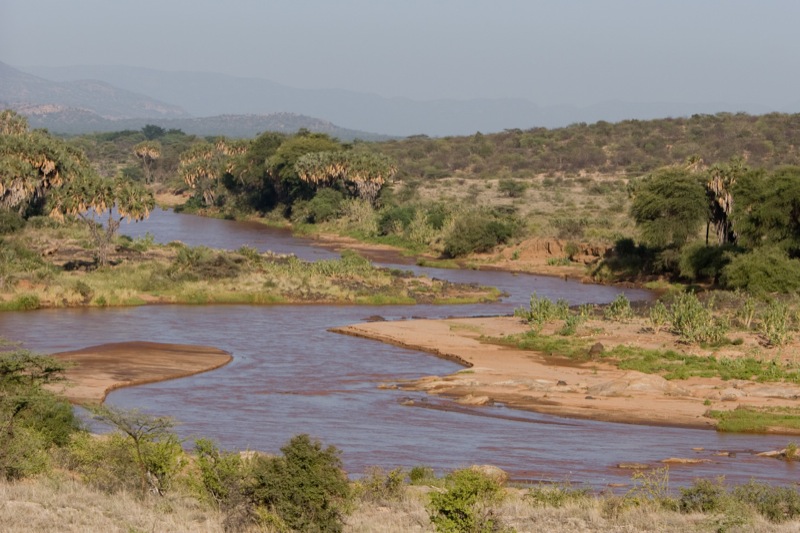
The Ewaso Ng’iro River — the name means “river of brown water” in the Maa language — is the ecological lifeline of the entire system. Originating in the Aberdare Range and on the slopes of Mount Kenya, it flows north through Laikipia before entering the Samburu ecosystem, where it supports the dense riverine forest of doum palms, fig trees, and tamarind that lines its banks. In a landscape this dry and hot, this ribbon of greenery is where everything congregates. The elephants, the crocodiles, the leopards, the birds, and the Samburu people who water their cattle here have all shaped their lives around this single river.
The Samburu Special Five: Species Found Nowhere Else in Kenya
The defining feature of Samburu’s wildlife is not what it shares with the rest of Kenya. It is what it doesn’t share.
Five species that live in Samburu are either absent from or extremely rare in Kenya’s southern parks, adapted specifically to the arid, semi-desert conditions of the north. Safari guides call them the Samburu Special Five, and for repeat Kenya visitors, ticking all five is a primary motivation for making the northern journey.
Grevy’s Zebra
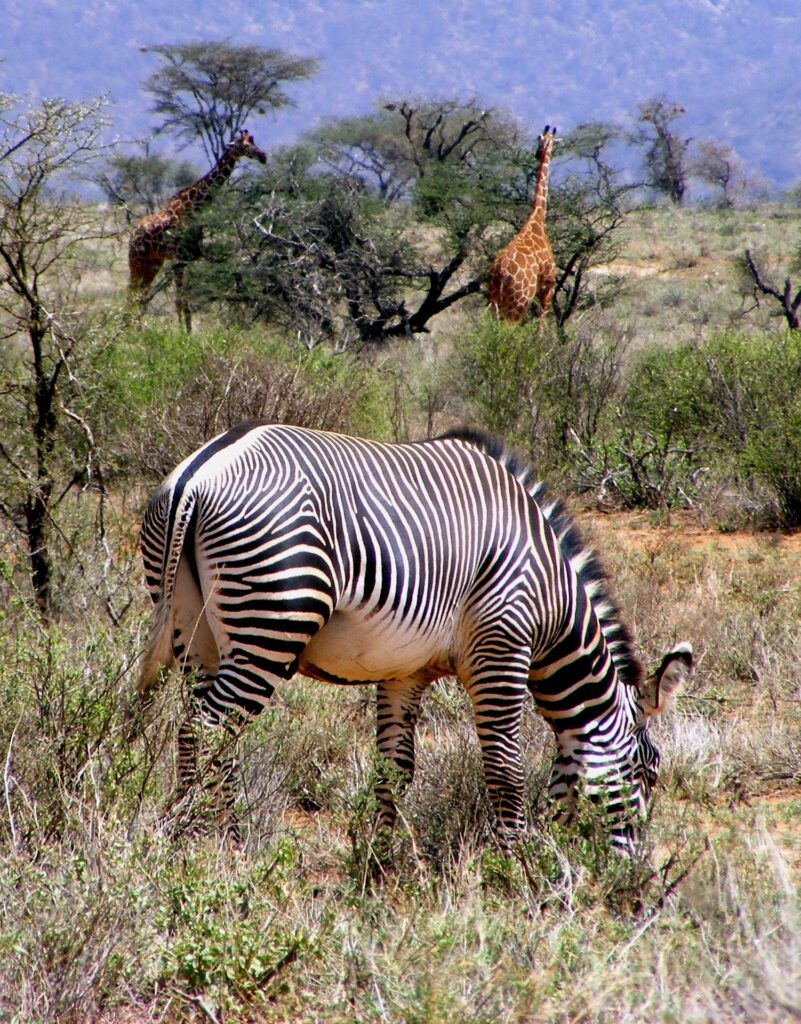
The world’s largest zebra species, and one of the most endangered — with a global population of around 2,000 individuals, over a third of which live in Kenya’s northern rangelands. Grevy’s zebra are strikingly different from the common plains zebra of the south: their stripes are narrower and more numerous, giving them a finer, more intricate patterning. Their ears are large and rounded, giving them a slightly donkey-like quality. They are taller and more horse-like in build than plains zebra, and unlike their southern relatives, they do not form permanent herds — males are territorial, and females move independently.
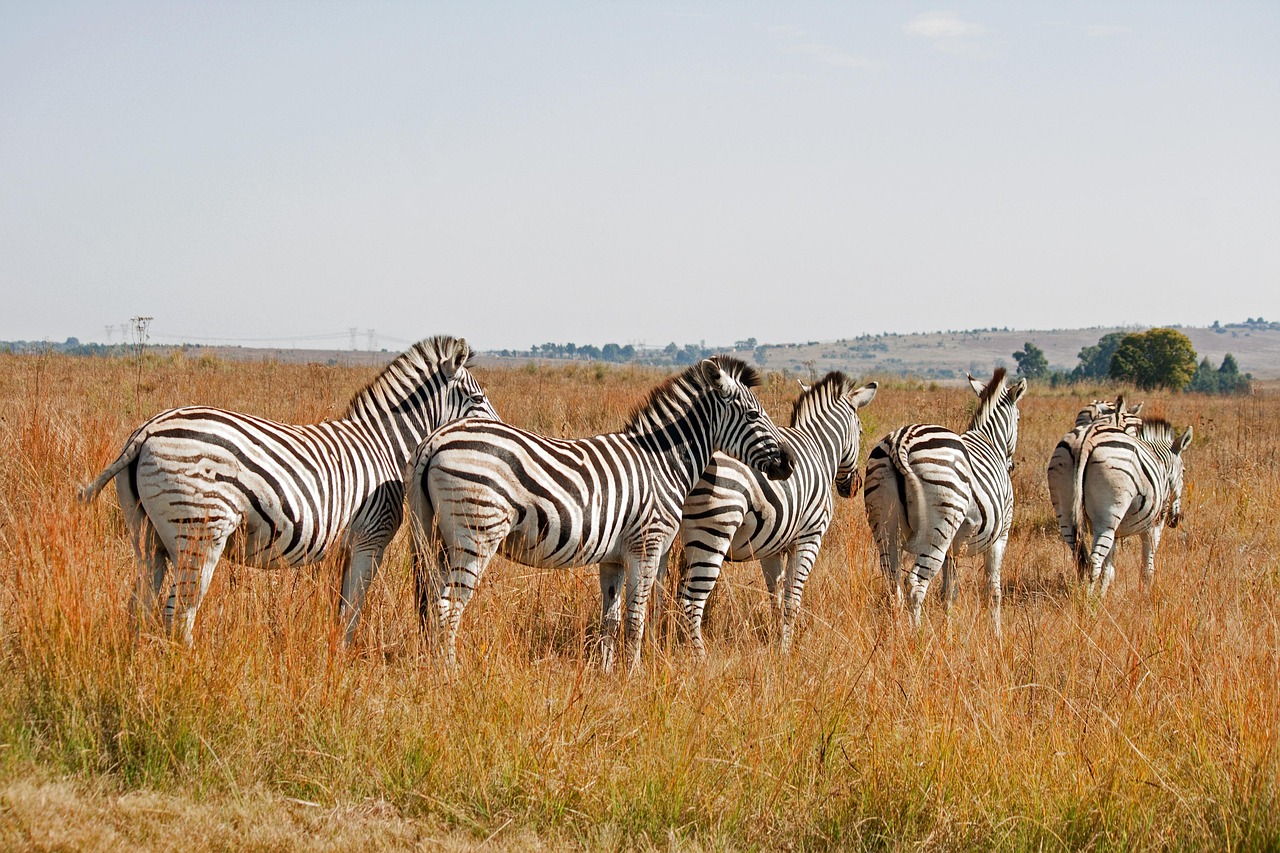
The contrast between seeing plains zebra in Amboseli and Grevy’s zebra in Samburu is remarkable enough that people who have seen both consistently describe the Grevy’s as the more beautiful animal.
Reticulated Giraffe
The most visually distinctive of Africa’s giraffe subspecies, the reticulated giraffe has a coat patterned with large, clearly defined polygonal patches of deep chestnut-brown separated by narrow white lines — a geometric precision that the more blurred patterning of Maasai giraffe lacks. Found only in northern Kenya and some parts of Ethiopia and Somalia, Samburu has a significant and reliably visible population. Seeing reticulated giraffe browsing against the red-rock Samburu hills at dawn is one of the reserve’s definitive experiences.
Gerenuk
The gerenuk is impossible to describe without sounding like you are inventing a creature. Specifically, this antelope is elongated and pencil-thin. It possesses a neck so disproportionately long that it looks like a stretched gazelle. Indeed, its name in Somali translates to “giraffe-necked.”
Furthermore, the gerenuk displays a defining and unique behavior. It adapts to arid environments where ground-level vegetation remains sparse. Consequently, the animal stands on its hind legs to browse. It balances upright against acacia branches. Thus, it reaches leaves several feet higher than other gazelle-sized antelopes. Ultimately, this specialized skill allows it to thrive where others might struggle.
Watching a gerenuk stand upright to feed is both comedic and genuinely remarkable — a perfect evolutionary solution to the food competition problem in a landscape where most browsers eat at the same height.
Beisa Oryx
The Beisa oryx is a large, elegantly built antelope. It possesses a pale grey-fawn body and dramatic black facial markings. Long, straight rapier horns complete its profile. This species adapts to the desert with implausible physiological skill. It tolerates body temperatures that would kill most mammals. Consequently, the oryx avoids water loss by not sweating. These animals prefer the open plains. They look strikingly beautiful in the clean, sparse light of Samburu’s dry season.
Somali Ostrich
The Somali ostrich differs visually from the common ostrich. Specifically, the male displays striking bare neck and leg skin. This skin appears blue-grey rather than the pink seen in common varieties. Furthermore, this bird lives exclusively north of the equator. Genetic analysis confirms it represents a completely separate species.
Notably, spotting the Somali ostrich requires a moment of close attention. At first glance, it resembles a standard ostrich. However, geographical context and distinctive coloration set it apart. Consequently, identifying this bird provides a satisfying completion to the Special Five list. Thus, every sighting rewards the observant traveler.
The Other Wildlife: Beyond the Special Five
The Special Five are the headline, but Samburu’s broader wildlife is exceptional.
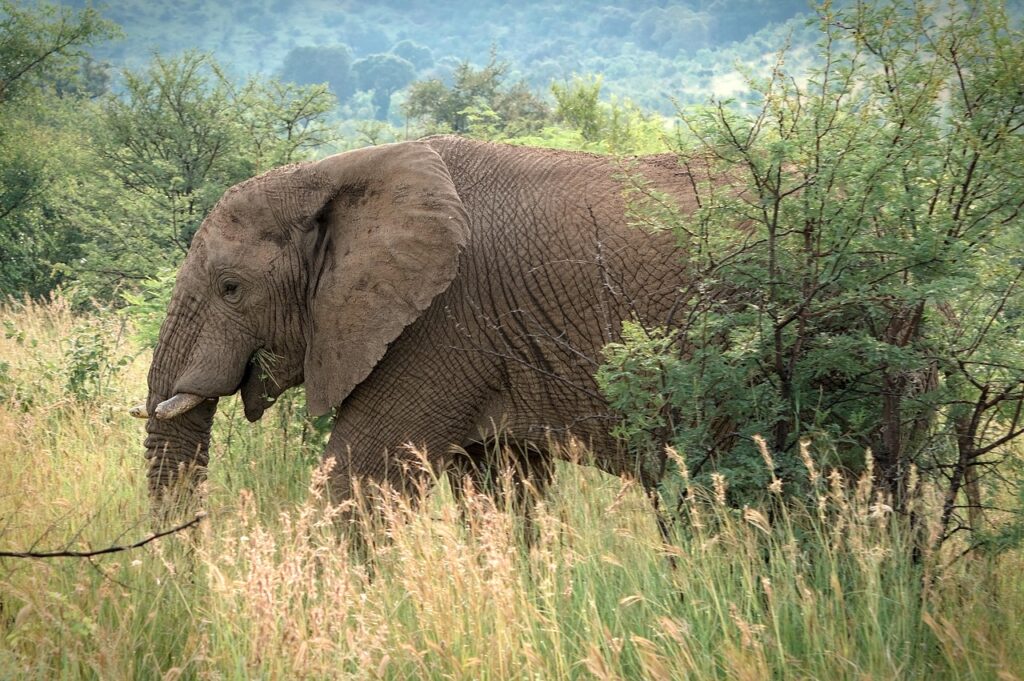
Elephants appear reliably and dramatically throughout the reserve. The Ewaso Ng’iro River draws large herds to drink and bathe. These encounters offer a rare quality of intimacy. The riverine setting further enhances the experience. You might witness herds crossing the water or playing in the shallows. Often, they arrive at the bank in the late afternoon light. Doum palms provide a striking backdrop for these moments. This scene remains one of Samburu’s greatest photographic gifts.
Dr. Iain Douglas-Hamilton founded the Save the Elephants organization. Specifically, he pioneered elephant behavioral studies in Samburu during the 1970s. This group has conducted continuous research in the reserve since 1993. Consequently, their work has produced groundbreaking discoveries. They study elephant cognition, communication, and social structures.
Furthermore, researchers analyze the deep effects of poaching on these families. Therefore, when you watch elephants in Samburu, you see documented history. You observe individuals with lives recorded for decades. Indeed, this legacy adds profound depth to every sighting. Ultimately, your experience connects you to one of Africa’s most significant conservation stories.
Leopards represent Samburu’s signature big cat. Indeed, many photographers consider this reserve Kenya’s premier leopard destination. The riverine forest along the Ewaso Ng’iro provides an ideal habitat. Consequently, trackers regularly spot several habituated individuals during daily game drives.
Furthermore, these leopards have adapted to a dry, rocky environment. This terrain differs significantly from the riverine forests of the Mara. Therefore, sightings often occur in more open and dramatic settings. Ultimately, this visibility makes the reserve a favorite for those seeking high-quality encounters.
Lions inhabit the reserve and appear regularly. Specifically, the Ewaso Lions research project monitors and tracks local prides. These researchers share movement data with local guides. Consequently, this cooperation improves sighting reliability for visitors.
Meanwhile, cheetahs frequent the open plains. Striped hyenas also reside here. Notably, these replace the spotted hyenas that dominate the south. These animals represent the rarer of Africa’s two hyena species. Furthermore, they live primarily in the arid north. Thus, every predator sighting in Samburu feels distinct and rare.
African wild dogs occasionally pass through, following their enormous ranging territories across the northern landscape. These sightings are never guaranteed and always extraordinary.
Birds: Over 450 species recorded, with remarkable northern specialists that don’t appear in southern Kenya. The vulturine guineafowl — arguably the most beautiful member of the guineafowl family, with its iridescent blue breast and extraordinary head plumage — forms flocks that walk the roads and plains of Samburu in numbers large enough to stop a game drive simply for admiration. The golden-breasted starling is a bird so extravagantly beautiful that first-time visitors consistently refuse to believe it is wild. The Somali bee-eater, the martial eagle, and the palm-nut vulture complete an avian cast that serious birders specifically travel to Samburu for.
The Ewaso Ng’iro River: Heart of the Ecosystem
The river deserves its own section, because understanding Samburu means understanding the Ewaso Ng’iro.
In a landscape where, annual rainfall can drop below 300 millimeters, the river is not merely important — it is everything. Every lodge in Samburu is built on its banks. Every wildlife concentration in the reserve relates to the water it provides and the food the riverine forest produces. The Samburu people water their cattle here. The elephants come here daily. The crocodiles — massive Nile crocodiles, some of the largest in Kenya — lie along its banks and hold the river’s permanent darkness in their unblinking eyes.
Watching the river from your lodge veranda at dawn is one of the reserve’s baseline pleasures. Things come to drink before the sun is fully up — elephant herds arriving in family groups, buffalos with their attendant egrets, hippos submerged in the deeper pools, baboons picking through the riverside rocks. The light in Samburu at this hour is extraordinary: low, golden, directional, and falling on the red rock and ochre grass in a way that photographers compose for hours.
The river also provides the structure for some of Samburu’s finest game drive routes. Following the riverbank road — stopping at points where animals concentrate, watching the forest edge for leopard movement, tracking the elephant herds upstream — is a methodology that consistently delivers encounters.
The Samburu People: More Than a Cultural Visit
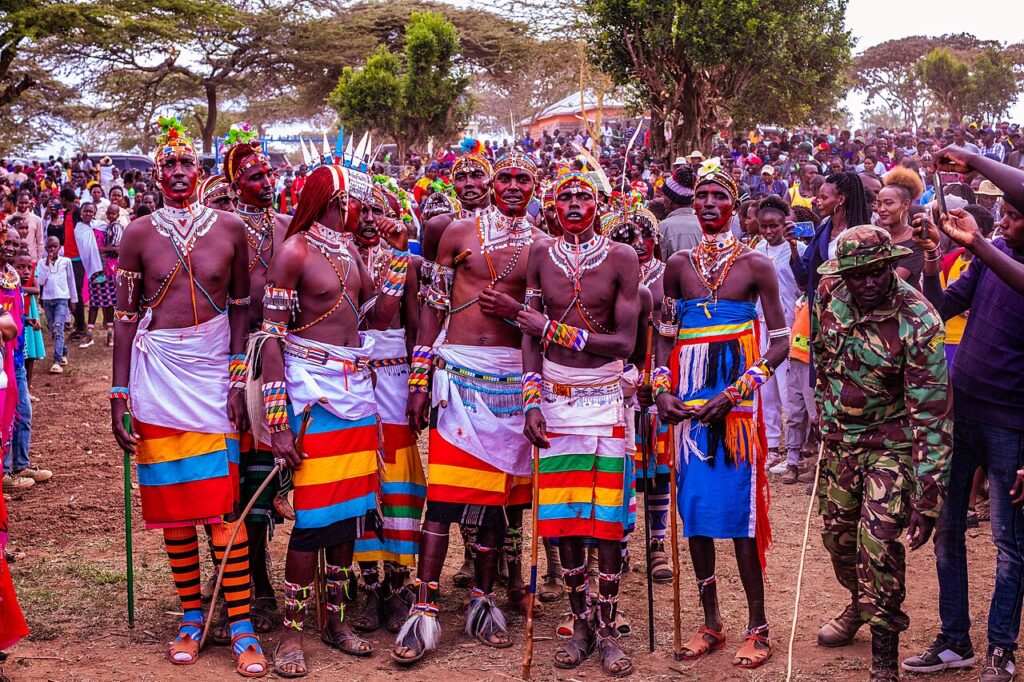
The Samburu people are the reason this reserve carries their name, and they are integral to understanding it properly.
The Samburu live as semi-nomadic pastoralists. Specifically, they share close relations with the Maasai. However, they remain distinct in their language, territory, and cultural traditions. Their society revolves entirely around cattle. Indeed, cattle ownership calibrates wealth, identity, and social standing. Furthermore, their traditional lifestyle involves moving herds through this arid landscape. They follow grazing patterns and water sources throughout the year. Consequently, their deep connection to the land defines their daily existence.
The warriors (moran) of the Samburu are among the most visually striking people in Kenya — tall, lean, adorned with elaborate red ochre hairstyles and layered beadwork of extraordinary intricacy. The beadwork itself is a form of communication, with different patterns indicating age-group, marital status, and social position in ways that require local knowledge to interpret.
Cultural visits to Samburu villages are offered by most lodges and should be approached as genuine encounters rather than performance tourism. The best visits include conversation — through a guide who can translate — about the livestock economy, the challenges of living alongside wildlife, the changing dynamics of the northern frontier, and the practices of the moran age-group system. Avoid visits that feel choreographed. Seek those that involve actual exchange.
The Singing Wells are one of Samburu’s most haunting cultural experiences. At certain times of year, when water sources are scarce, Samburu herders dig wells by hand in dry river beds and form human chains to pass water to the surface for their livestock. They sing as they work — a coordinated, rhythmic chanting that regulates the pace of the chain and has been performed in this landscape for generations. Witnessing this at dawn is the kind of experience that exists entirely outside the standard safari itinerary.
Reteti Elephant Sanctuary, located near the reserve, is a community-run operation that rescues and rehabilitates orphaned elephants. It is notable not only for its conservation work but for being the first elephant sanctuary in Africa to be owned and operated by an indigenous community. Visits can be arranged and combine a moving encounter with orphaned calves with a powerful conservation and community development story.
Samburu vs. the Maasai Mara: The Honest Comparison
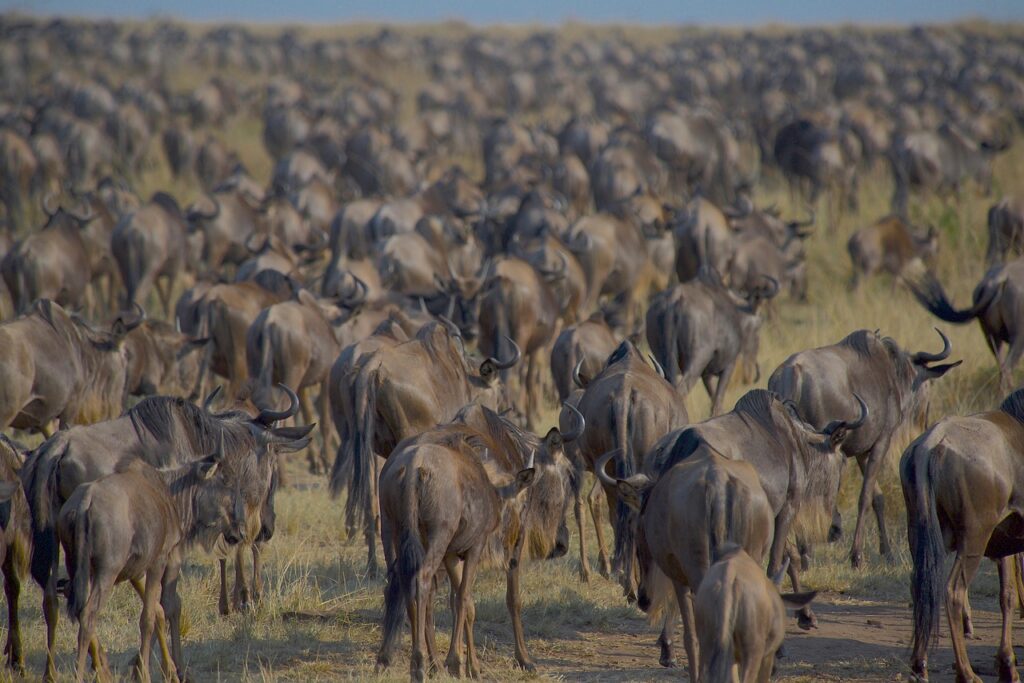
Let’s answer the question directly.
Go to the Maasai Mara if: This is your first Kenya safari, you specifically want to witness the Great Migration, you want the highest density of Big Five sightings in the shortest time, or you want the widest range of accommodation options at every budget level.
Go to Samburu if: Visit Samburu if you have already mastered the Mara. It serves those seeking a genuinely different frontier. Serious photographers will find unique species and dramatic light here. You can work without competing against twenty other vehicles.
The reserve offers the chance to find the Special Five. Furthermore, it provides leopard sightings of unusual quality. Choose this destination for cultural immersion that feels less packaged. If you crave true solitude, this is your landscape.
The best Kenya circuit includes both. A northern Kenya itinerary that combines Samburu (3 nights) with either Laikipia or Lewa conservancy (2 nights — rhinos, wild dogs, horseback safaris) creates one of Africa’s finest wildlife circuits, entirely distinct from the southern parks in character and content.
Samburu and the Northern Circuit: Laikipia Connection
Samburu rarely visits as a standalone destination among those who know Kenya well. It almost always appears as part of a northern Kenya circuit that combines the reserve with the broader Laikipia Plateau — a patchwork of private conservancies and community lands to the south and west that supports some of the country’s highest concentrations of rare species.
Ol Pejeta Conservancy (Kenya’s largest black rhino sanctuary, home to the last northern white rhinos) is about four hours from Samburu by road. Lewa Wildlife Conservancy is closer — around two hours — and supports exceptional concentrations of both black and white rhino, Grevy’s zebra, African wild dogs, and lion. Borana and Il Ngwesi conservancies round out a northern circuit that, across seven to ten days, delivers a safari experience entirely different from the Mara-Amboseli south.
Where to Stay in Samburu
Samburu’s accommodation has developed considerably, and the best lodges are among Kenya’s finest.
Sasaab Lodge sits in the Kalama Conservancy north of the reserve — nine spacious suites with stunning views across the Ewaso Ng’iro to the plains beyond. The architecture draws on northern African and Moroccan influences in a way that should feel incongruous and somehow doesn’t. Private plunge pools, exceptional guiding, and access to the 240,000-acre Kalama Conservancy wilderness give Sasaab a sense of scale and exclusivity that makes it one of Kenya’s most compelling addresses.
Saruni Samburu is built around massive boulders on a clifftop in the Kalama Conservancy, with views that encompass the entire northern landscape including, on clear days, the snow-capped summit of Mount Kenya visible above the horizon. Night drives, guided walks to ancient Samburu rock art, and a sunken elephant waterhole hide for photography are among its more distinctive offerings.
Elephant Bedroom Camp sits directly on the Ewaso Ng’iro River within the reserve, named for the almost-daily visits by elephant herds that come to drink. The eleven tented rooms are raised on wooden decks above the riverbank, and the main mess area looks directly onto the water. Leopard and lion also pass through camp on occasion. This is one of those properties where the wildlife experience begins before you’ve left your room.
Larsen’s Tented Camp is one of Samburu’s longer-established camps — twenty tented rooms on the river with a warm, personal feel, a good pool, and an engaging team. It remains one of the better mid-range options in the reserve and offers walking safaris.
Ashnil Samburu Camp (Buffalo Springs) offers thirty luxury tents in a beautifully landscaped setting on the Buffalo Springs side of the river — a reliable mid-range-to-luxury option with excellent guiding and full-board operations.
Save the Elephants and the Scientific Legacy of Samburu
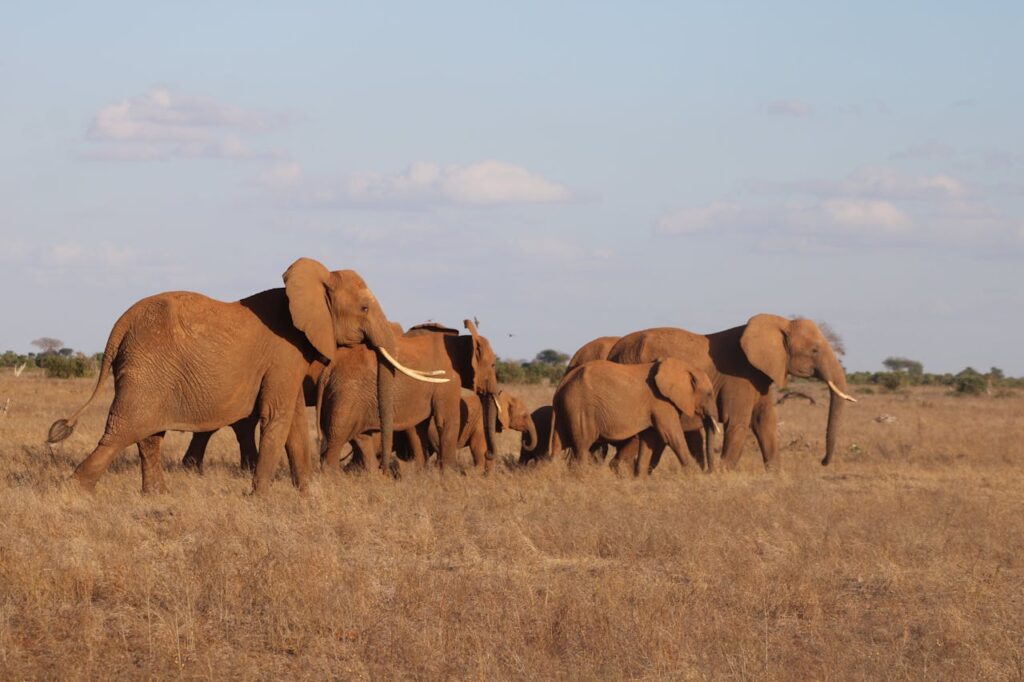
One detail about Samburu that separates it from virtually every other African reserve is the depth of its scientific legacy — and the way that legacy enriches the experience of simply being there.
Dr. Iain Douglas-Hamilton began his elephant behavioural research in Samburu in the 1970s, in work that helped establish the fundamental framework for understanding elephant social structure. His daughter Saba Douglas-Hamilton continued the family connection to the area and has helped communicate Samburu’s conservation work to global audiences. The organisation they founded, Save the Elephants, has maintained its research base at Samburu since 1993 and has transformed understanding of elephant cognition, navigation, communication, and family dynamics through decades of continuous study.
The practical consequence for visitors is that the elephants you encounter in Samburu are among the most extensively documented wild animals on earth. Some individuals have been observed, named, and followed across their entire lifetimes. The matriarchs who lead the herds to the Ewaso Ng’iro carry decades of accumulated knowledge about seasonal water sources, safe corridors, and the geography of northern Kenya — knowledge that saves the calves who follow them during droughts that would kill less experienced herds.
When your guide points to a matriarch approaching the river and says her name — many Samburu guides know the individual animals — you are looking at something unique: a wild animal whose entire life story, from birth to the moment in front of you, has been recorded.
Photography in Samburu: A Photographer’s Paradise
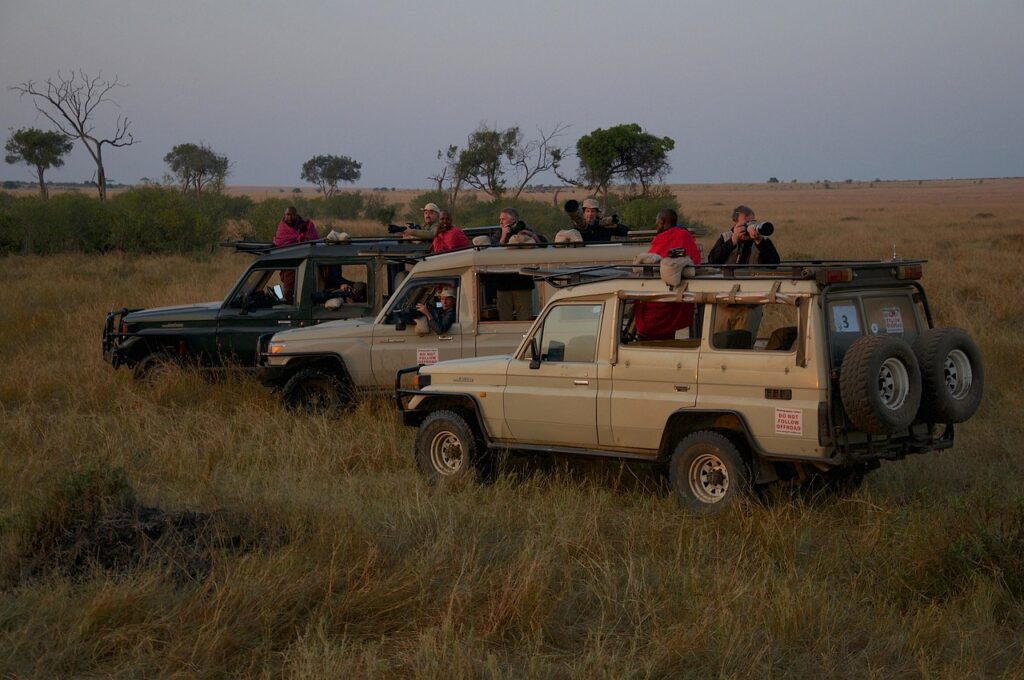
Wildlife photographers who have worked in multiple African parks tend to single out Samburu as one of their favorites — and the reasons are specific.
The quality of light in Samburu is exceptional. The semi-arid environment, at relatively low altitude (around 850 meters), produces clear, clean atmospheric conditions with intense golden-hour light at dawn and dusk. The red soil, ochre rocks, and green river vegetation create a color palette unlike any other Kenyan park.
The composition possibilities are extraordinary. The Ewaso Ng’iro River provides endless opportunities: animals at the water’s edge with the doum palm forest behind them, reflections in still pools, crossing sequences, and the drama of crocodiles and wildlife sharing the same narrow resource. The rocky outcrops and open plains give photographic variety within short distances.
The exclusive access — fewer vehicles than the Mara, more habituated animals in quieter conditions — means that exceptional sightings are not constantly diluted by the arrival of other vehicles. A leopard in a riverine tree, a gerenuk standing upright, a Grevy’s zebra family at the waterhole — these encounters in Samburu tend to unfold slowly, without the urgency that crowded parks impose.
Night drives (available in the private conservancies adjacent to the reserve, not within the reserve itself) open up nocturnal species — aardvark, bushbaby, African civet, striped hyena, and the spectacular porcupine in the camp lights.
Getting to Samburu
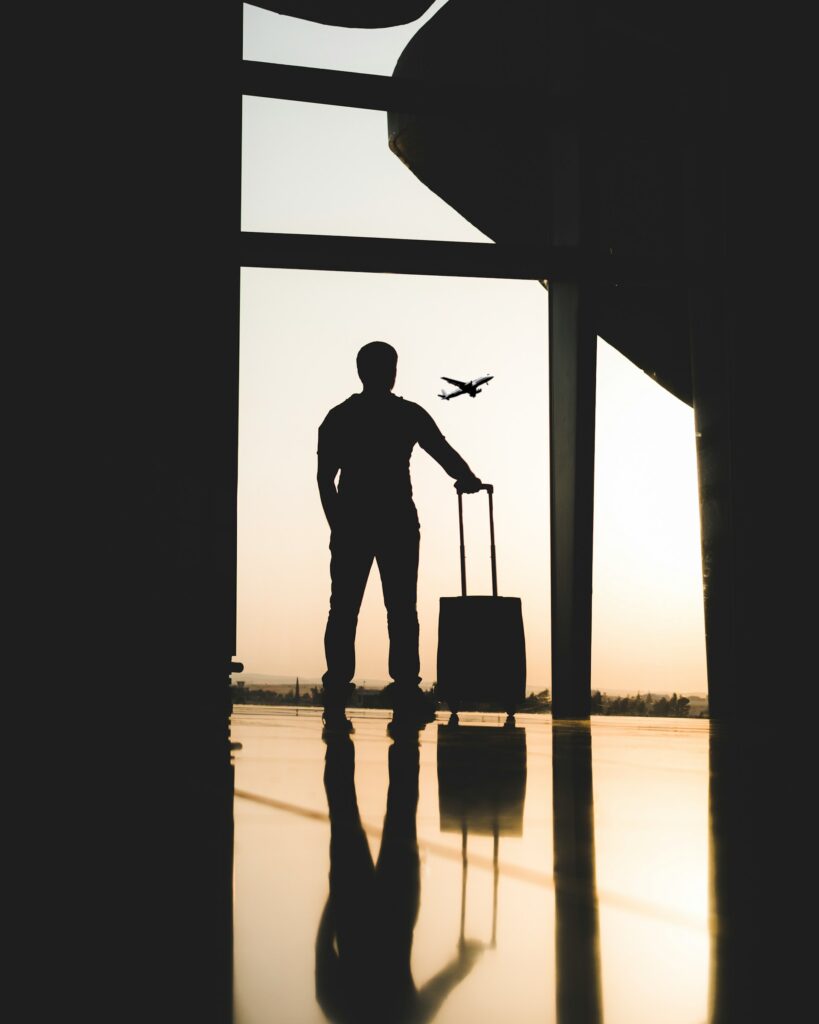
By air: The fastest and recommended option for most international visitors. Daily scheduled flights from Wilson Airport in Nairobi reach Buffalo Springs or Kalama Airstrip in approximately one hour. Several charter operators also serve the route. This eliminates the road journey and maximizes time in the reserve.
By road: Approximately 350 kilometers from Nairobi — around 6–7 hours via the A2 highway north through Nanyuki and Isiolo to Archer’s Post (the gateway town, 5 kilometers south of the main gate). The road journey is scenic through the foothills of Mount Kenya and the transition from highland green to northern arid on the descent to the Samburu plains. A 4×4 is not required for the main highway but recommended for reserve roads.
When to Go
Samburu is genuinely year-round in a way that few Kenyan parks are. The reserve does not have the extreme wet-season road problems that affect some southern parks, and the wildlife along the Ewaso Ng’iro remains concentrated and visible in all seasons.
July–October (Dry Season): The peak window for wildlife concentration along the river. Vegetation is sparse, making sightings easier. Hot (temperatures regularly exceed 35°C) but ideal for photography and game viewing.
January–March: An excellent alternative period — dry and clear, with fewer visitors than the July–October peak. Many experienced safari operators consider this window the sweet spot: good conditions, lower prices, and a quieter reserve.
April–June and November: The rains bring dramatic skies, greener landscape, and exceptional birdwatching as migratory species arrive. Wildlife viewing becomes more dispersed but remains good. Prices drop. The reserve has a different, softer beauty.
Samburu will not overwhelm you with spectacle on the first morning the way the Mara sometimes does. It rewards patience, attention, and a willingness to be surprised by animals you’ve never encountered before. The gerenuk standing on its hind legs. The reticulated giraffe’s geometric coat against the red hills. A leopard in a doum palm reflected in the Ewaso Ng’iro at sunrise.
Come prepared to be changed by the north. You will be.
Ready to discover Kenya’s northern frontier? Enquire about Samburu and northern Kenya safari packages and get an itinerary that goes far beyond the standard circuit.
Related Articles
Wildebeest Migration: Why It Doesn’t Wait for No One
Every year, without a calendar, without a forecast, and without a single human cue, over 1.5 million...
Amboseli’s Elephants Walk Toward Kilimanjaro and You Will Cry
Nobody warns you that it will be the silence that does it. You have seen photographs. Ofcourse you k...
Tsavo Is Raw, Vast, Completely Untamed. That’s Why We Love It.
The Maasai Mara gets the magazine covers. Amboseli gets the Kilimanjaro photographs. But somewhere i...
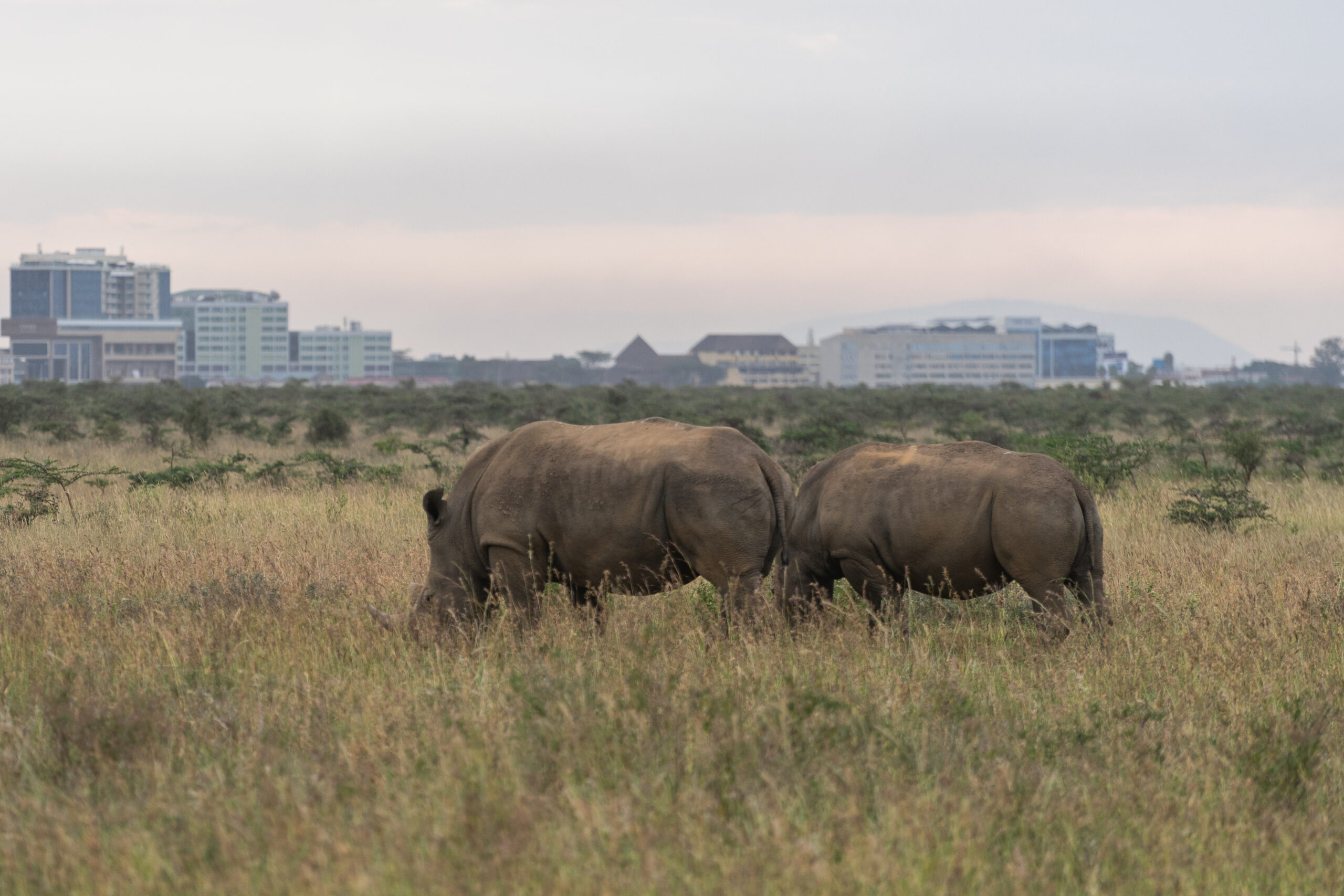
Discover Nairobi National Park: The World’s Only Wildlife Park Next to a Capital City
Discover why January offers exceptional wildlife viewing in Kenya. Learn about weather, Great Migrat...