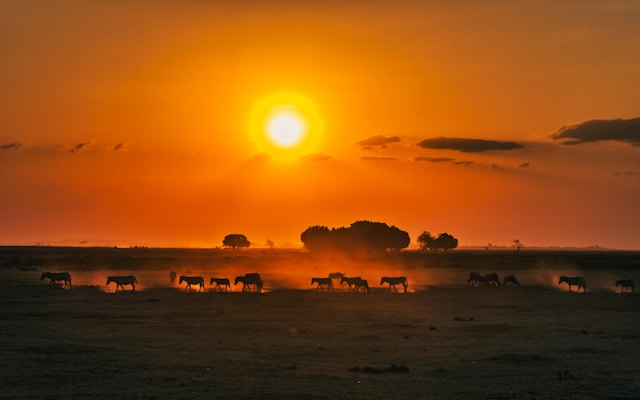
There’s a moment — and every person who has ever set foot in Kenya will tell you this — where time stops. You’re sitting in an open-sided Land Cruiser at dawn, the savanna painted gold in every direction, and a lioness emerges from the tall grass not twenty meters away. She glances at you, unbothered, and disappears into the morning mist. And you realize, with absolute certainty, that nothing you’ve ever seen on a screen or read in a magazine has come close to preparing you for this.
That is Kenya.
Over 2.39 million international visitors made their way here in 2024 alone — a 14.6% jump from the year before — and the majority of them came for one thing: wildlife. They came to feel the tremor of the earth as thousands of wildebeest thunder toward a crocodile-filled river. They came to track leopards at dusk, to watch elephants bathe with Kilimanjaro glowing behind them, to fall asleep in a tented camp listening to hippos’ grunt in the darkness. They came because no documentary, however good, ever quite captures what it feels like to simply be there.
This is your complete Kenya safari guide for 2026. Whether you’re planning your first safari or your fifth, whether you’re travelling as a couple, a family, or a solo explorer, this guide will walk you through everything — where to go, what to expect, and how to make the most of one of the greatest wildlife destinations on earth.
Why Kenya? And Why Now?
Let’s be honest: there is no shortage of safari destinations on this continent. Tanzania’s Serengeti is extraordinary. Botswana’s Okavango Delta is unlike anywhere else on earth. South Africa’s Kruger Park is enormous and deeply rewarding. So why does Kenya continue to lead the conversation?
The answer, quite simply, is density. Kenya packs an unbelievable variety of ecosystems, wildlife, cultures, and experiences into a relatively compact geography. In a single trip, you can witness the Great Migration, track desert-adapted species in the north, and be on a white-sand Indian Ocean beach within 90 minutes of landing in Mombasa. The diversity is staggering.
Kenya was also ranked the world’s friendliest country in Condé Nast Traveller‘s 2025 rankings — and if you’ve been here before, that will come as no surprise at all. There’s a warmth to this country that stays with you long after you’ve left.
Add to that a newly streamlined visa-free entry policy through the Electronic Travel Authorisation (eTA) system, growing flight connectivity from major hubs across Europe, North America, Asia, and the Gulf, and a tourism infrastructure that has matured considerably over the past decade — and you have a destination that is easier, more comfortable, and more rewarding to visit than ever before.
The time, very simply, is now.
Understanding Kenya’s Safari Ecosystem
Before you start booking game drives, it helps to understand what makes Kenya’s wildlife landscape so distinctive. The country is not one ecosystem — it is many, layered on top of each other.
The Great Rift Valley slices through the country from north to south, creating dramatic escarpments, saline lakes alive with flamingos, and fertile highland forests. To the south, the rolling grasslands of the Maasai Mara blend seamlessly with Tanzania’s Serengeti, forming the single largest wildlife corridor on the planet. To the north, semi-arid scrubland gives way to riverine forests along the Ewaso Ng’iro River, home to species you won’t find anywhere else in Kenya. Along the coast, mangroves, marine parks, and ancient coral reefs form an entirely different world.
This ecological diversity is why Kenya’s wildlife list is so staggering: over 25,000 species of animal life, more than 1,100 bird species, and some of the highest predator densities on earth. It is also why Kenya safari planning requires a little more thought than simply picking a park — the experience you have in Amboseli is profoundly different from the experience you have in Samburu, and both are entirely different from the Maasai Mara.
The Big Five and Beyond: What You’ll Actually See
Let’s talk about the wildlife. Specifically, let’s be honest about it — because the phrase “Big Five” has become a checklist that undersells the true richness of what Kenya offers.
Lions are perhaps the most reliably spotted of all the big cats, particularly in the Maasai Mara where prides roam open grasslands in full view. Kenya is home to some of the most studied lion populations on earth, and encounters are frequent, prolonged, and deeply intimate.
Leopards, by contrast, are secretive and largely nocturnal — which makes a sighting all the more thrilling. The riverine forests of the Mara and Samburu are among the best places on the continent to find them draped over an acacia branch in the late afternoon.
Elephants in Kenya deserve a category of their own. Amboseli is famous for its large-tusked giants — affectionately called “super-tuskers” — and the sight of a matriarch leading her family across a dusty plain with Kilimanjaro rising behind her is one of those images that rewires something inside you permanently.
Buffalo are often dismissed as the least glamorous of the Big Five, but a herd of Cape buffalo — thousands strong — moving through the Maasai Mara at sunset is genuinely awe-inspiring.
Rhinos require a specific plan. Kenya’s black rhino population is recovering well, and the best places to find them are Ol Pejeta Conservancy in Laikipia and Lake Nakuru National Park. Ol Pejeta is also home to the last two northern white rhinos on earth — Najin and Fatu — cared for by round-the-clock armed rangers in one of conservation’s most poignant stories.
Beyond the Big Five, Kenya’s wildlife cast is extraordinary.
Cheetahs are reliably spotted in the Mara and are now more commonly seen in the conservancies surrounding it.
African wild dogs — one of the continent’s most endangered carnivores — have been reintroduced successfully at Ol Pejeta.
Hippos mass in the Mara River in enormous, wallowing herds.
Grevy’s zebra, the world’s largest and most endangered zebra species, exists in viable numbers only in northern Kenya.
Gerenuk — the long-necked, impossibly elegant antelope that stands on its hind legs to browse — is a Samburu specialty.
And then there are the birds. Over 1,100 species. The lilac-breasted roller, impossibly colorful. Secretary birds stalking the grasslands. Martial eagles, massive and regal. Flamingos — sometimes a million of them — turning Lake Bogoria and Lake Nakuru completely, surreally pink.
The Great Migration: Africa’s Greatest Show
No Kenya safari guide would be complete without giving the Great Migration the space it deserves.
Every year, driven by rainfall and instinct, approximately 1.5 to 2 million wildebeest, along with hundreds of thousands of zebra and gazelle, execute a clockwise loop through the Serengeti-Mara ecosystem. They follow the grass. They always have. The loop takes them through Tanzania’s Serengeti for much of the year, then northward across the Mara River into Kenya’s Maasai Mara, then back south again as the rains return.
The Kenyan portion of this migration — roughly July through October — is when the drama reaches its absolute peak. This is when the river crossings happen.
The Mara River crossings are, without question, some of the most spectacular wildlife events on earth. Thousands of wildebeest crowd the riverbank, hesitating, jostling, panicking. Then one animal commits. The herd follows. They plunge into dark, fast-moving water patrolled by enormous Nile crocodiles — some of the largest in Africa — while lions wait on the far bank. There is chaos, there is beauty, and there is death. It is completely, utterly unforgettable.
The crossings are not guaranteed on any given day — this is wildlife, not performance — but between July and October, your chances of witnessing one are extremely high with a knowledgeable guide. The best operators know the river crossing points and monitor the herds closely.
Even outside migration season, the Maasai Mara ranks as Africa’s finest wildlife reserve for sheer predator density. The Mara is good every single month of the year.
Kenya’s National Parks and Reserves: A Complete Guide
Maasai Mara National Reserve
The crown jewel. The Mara is roughly 1,500 square kilometers of open savanna, riverine forest, and rolling hills, and it is managed as a national reserve — meaning Maasai communities are active stakeholders in its management, which matters enormously for both conservation and cultural authenticity.
Best for: Great Migration, big cats, game drives, hot air balloon safaris, cultural Maasai village visits.
Best time: Year-round, peaking July–October.
Insider tip: The private conservancies bordering the Mara — Naboisho, Olare Motorogi, Mara North — offer smaller vehicle numbers, exclusive wildlife, and the ability to do walking safaris and night drives that are not permitted in the reserve itself. If your budget allows, these are transformative.
Amboseli National Park
Few images in wildlife photography are more iconic than an elephant herd moving across the dust with the snow-capped summit of Kilimanjaro framed above them. Amboseli delivers this, reliably, and the park’s elephant population is among the most studied and relaxed in Africa — meaning you can spend extended time with herds at genuinely close range.
Best for: Elephant encounters, Kilimanjaro photography, birdlife (over 600 species recorded), dry-season game viewing.
Best time: June–October (dry season) and January–February (short dry season).
Insider tip: Swampy areas fed by underground streams from Kilimanjaro attract vast concentrations of wildlife even in the dry season — position yourself near these areas in the morning.
Tsavo National Parks (East & West)
Together, Tsavo East and Tsavo West form the largest protected area in Kenya — and one of the largest in Africa. The park has a wilder, less visited feel than the Mara or Amboseli, which many travelers actively prefer.
Tsavo East is characterized by vast open plains, red-dust elephants (who roll in the distinctive red laterite soil), the Yatta Plateau, and enormous buffalo herds. The Galana River provides a vital water source and spectacular wildlife viewing.
Tsavo West is more rugged and scenic, featuring volcanic hills, the extraordinary Mzima Springs (where you can view hippos through an underwater observation chamber), and the Ngulia Rhino Sanctuary.
Best for: Fewer crowds, red elephant photography, the “classic Africa” feel, combining with a Mombasa or Diani Beach coastal extension.
Best time: June–October and January–March.
Samburu National Reserve
Samburu sits in Kenya’s semi-arid north, and it feels like a different country entirely from the Mara. The landscape is drier, the light is different, the wildlife is different — and the cultural atmosphere, with the Samburu people as the predominant community, is richly distinctive.
Samburu is the place to see the so-called “Samburu Five”: the Grevy’s zebra, reticulated giraffe, gerenuk, Beisa oryx, and Somali ostrich — all species found in northern Kenya and nowhere else in the country. The Ewaso Ng’iro River attracts large concentrations of elephants, lions, leopards, and crocodiles.
Best for: Rare northern species, leopard sightings, cultural Samburu experiences, combining with Laikipia or a Kenyan Highlands circuit.
Best time: July–September (dry season).
Ol Pejeta Conservancy, Laikipia
Ol Pejeta is not a national park — it’s a private conservancy, which gives it a completely different character. It’s Kenya’s largest black rhino sanctuary and home to some of the most impressive rhino sightings on the continent. It’s also the only place in the world where you can see chimpanzees in a sanctuary setting alongside African savanna wildlife.
The conservancy also supports significant populations of African wild dogs, common eland, and the critically endangered Grevy’s zebra.
Best for: Rhino tracking, night drives (permitted here), walking safaris, chimpanzee encounters, intimate and exclusive safari experience.
Best time: Year-round. January–March and July–October are especially good.
Lake Nakuru National Park
Lake Nakuru sits within the Great Rift Valley at roughly 1,800 meters above sea level — cooler and greener than the lowland parks. It’s a UNESCO World Heritage Site and an Important Bird Area, known historically for staggering flamingo concentrations (water level fluctuations now affect numbers, but the birds remain).
More predictably, Lake Nakuru is one of Kenya’s most reliable destinations for black and white rhino sightings, and it’s also home to the endangered Rothschild’s giraffe, reintroduced here from populations that had virtually disappeared elsewhere. Tree-climbing lions, Defassa waterbuck, and over 450 bird species complete the picture.
Best for: Rhinos, flamingos, birding, Rothschild’s giraffes, combining with a Maasai Mara circuit.
Best time: Year-round.
Nairobi National Park
This is, by any measure, one of the most remarkable wildlife paradoxes on the planet: a fully functional national park, home to lions, rhinos, giraffes, leopards, and hundreds of bird species — with the Nairobi city skyline visible in the background.
Nairobi National Park is not a substitute for a proper safari, but it’s a genuinely excellent way to spend a morning on arrival or departure — and it’s often combined with the David Sheldrick Wildlife Trust (elephant orphanage) and the African Fund for Endangered Wildlife Giraffe Centre, both located nearby and both deeply moving conservation experiences.
Best for: Pre/post-safari wildlife fix, family visits, combining with Sheldrick Elephant Orphanage.
Best time: Year-round.
Safari Styles: Finding the Experience That Fits You
One of the most important — and most overlooked — aspects of Kenya safari planning is matching the style of safari to the kind of traveler you are. Kenya offers an extraordinary range of options.
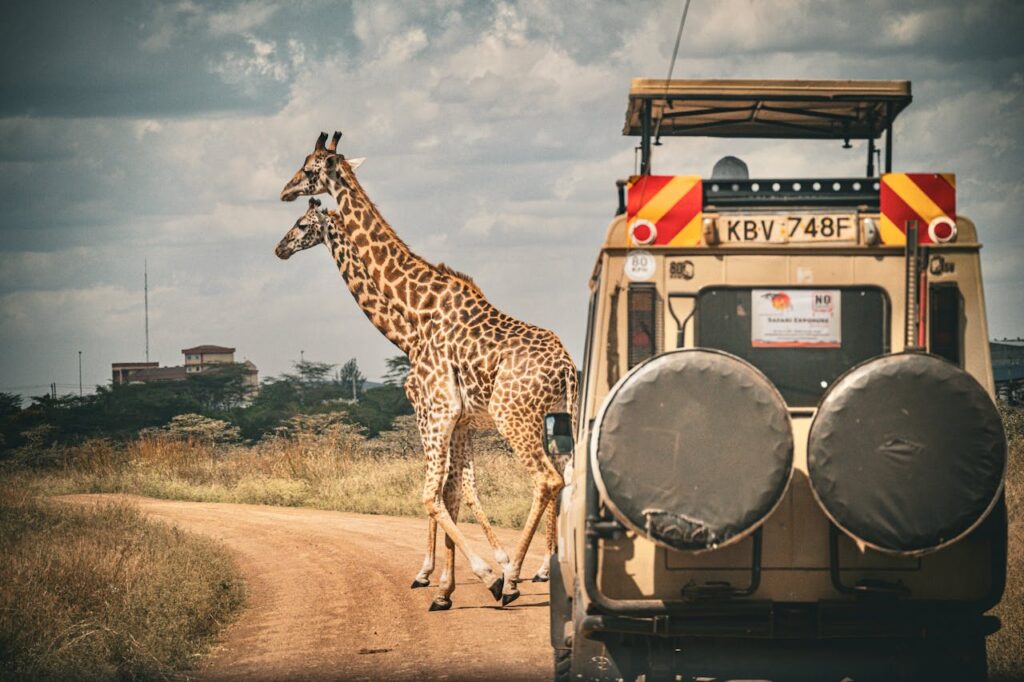
Classic game drive safaris in shared 4×4 vehicles are the most common format and remain deeply satisfying. You’re typically out at first light (5:30–6:00 AM is standard), back in camp for breakfast and rest, then out again in the late afternoon as temperatures drop and animals become active again. Evenings often involve a “sundowner” — a drink with a view — before dinner around the fire.
Luxury lodge safaris elevate every element: private villas with plunge pools, gourmet meals, private game drives with dedicated guides and vehicles, and infinity pools overlooking waterholes. Kenya has some of Africa’s finest luxury properties — names like Angama Mara, Mahali Mzuri, and Beyond Bateleur Camp, and Segera Retreat regularly appear in the world’s top hotel lists.
Tented camp safaris are the classic East African form — canvas walls, wooden floors, real beds, and the sounds of the wild right outside your tent. The best tented camps combine genuine comfort with authentic immersion. Falling asleep to the call of a hyena or the distant rumble of a lion is an experience no bricks-and-mortar hotel can replicate.
Mobile camping safaris follow the wildlife rather than being fixed to one location. You move every few days, setting up camp in new locations — an incredibly flexible and adventurous format that’s popular with travellers who want to cover ground and avoid the large permanent camps.
Walking safaris are available in certain areas (Ol Pejeta, the Laikipia conservancies, and Samburu, among them) and offer a completely different sensory experience from a vehicle. On foot, with a qualified armed ranger, you read the landscape differently — tracks, dung, alarm calls from birds, the wind direction. Everything slows down and sharpens.
Hot air balloon safaris over the Maasai Mara are genuinely extraordinary — drifting silently at sunrise over the plains, watching game below, before landing for a champagne breakfast in the bush. It is, frankly, one of the most romantic things you can do anywhere on earth.
When to Go: Seasonal Guide
July–October (Peak Season): This is the Great Migration period and the absolute best time for wildlife viewing throughout Kenya. Skies are generally clear, grass is shorter (making animals easier to spot), and predator activity peaks. It’s also the busiest and most expensive period — book well in advance.
January–March (Short Dry Season): An excellent alternative peak. The migration has returned to Tanzania, but resident wildlife populations are concentrated around water sources, predator activity remains high, and the landscape is green and lush without the heavy rains. Fewer tourists than in July and October, and generally more competitive pricing.
April–June (Long Rains): Kenya’s low season. Parks are quieter, prices drop considerably, and the landscape transforms into extraordinary verdant green. This is genuinely a fantastic time for photographers who prefer soft light and dramatic skies. Some roads become difficult and certain lodges close — but those that remain open often offer exceptional value.
November–December (Short Rains): Similar to the long rains but shorter and less predictable. Good birdwatching as migratory species arrive. Another period of relative quiet and competitive rates.
Practical Kenya Safari Planning: What You Need to Know
Getting There: Jomo Kenyatta International Airport (NBO) in Nairobi is the main international gateway, with direct connections from London, Amsterdam, Paris, Dubai, Doha, Abu Dhabi, Mumbai, and multiple African cities. Kenya Airways, British Airways, KLM, Air France, Emirates, Qatar Airways, and Etihad all serve Nairobi. Moi International Airport in Mombasa serves direct flights from Europe during peak season.
Getting Around: Internal charter flights are the most practical way to move between safari destinations. Flying from Nairobi to the Maasai Mara takes approximately 45 minutes; from Nairobi to Samburu, around an hour. Road transfers are available but can be long — the drive from Nairobi to the Mara is approximately 5–6 hours on roads that range from tarmac to corrugated murram. Many itineraries fly in and drive out or vice versa.
Visas and Entry: Kenya operates an Electronic Travel Authorization (eTA) system, replacing the previous visa regime. Applications are made online before travel and are straightforward for most nationalities. Check the DHS Kenya portal for the latest passport requirements.
Health: Yellow fever vaccination is recommended (and required if arriving from certain countries). Malaria prophylaxis is advised for all safari areas — consult your GP or a travel health clinic. Comprehensive travel insurance covering medical evacuation is non-negotiable in Kenya.
Currency and Money: The Kenyan Shilling (KES) is the local currency, though most safari lodges, conservancy fees, and park fees are priced and payable in US Dollars. Card payments are widely accepted in Nairobi and at major lodges; cash is useful in smaller towns. Kenya Wildlife Service (KWS) park fees are paid via the M-PESA-linked eCitizen platform.
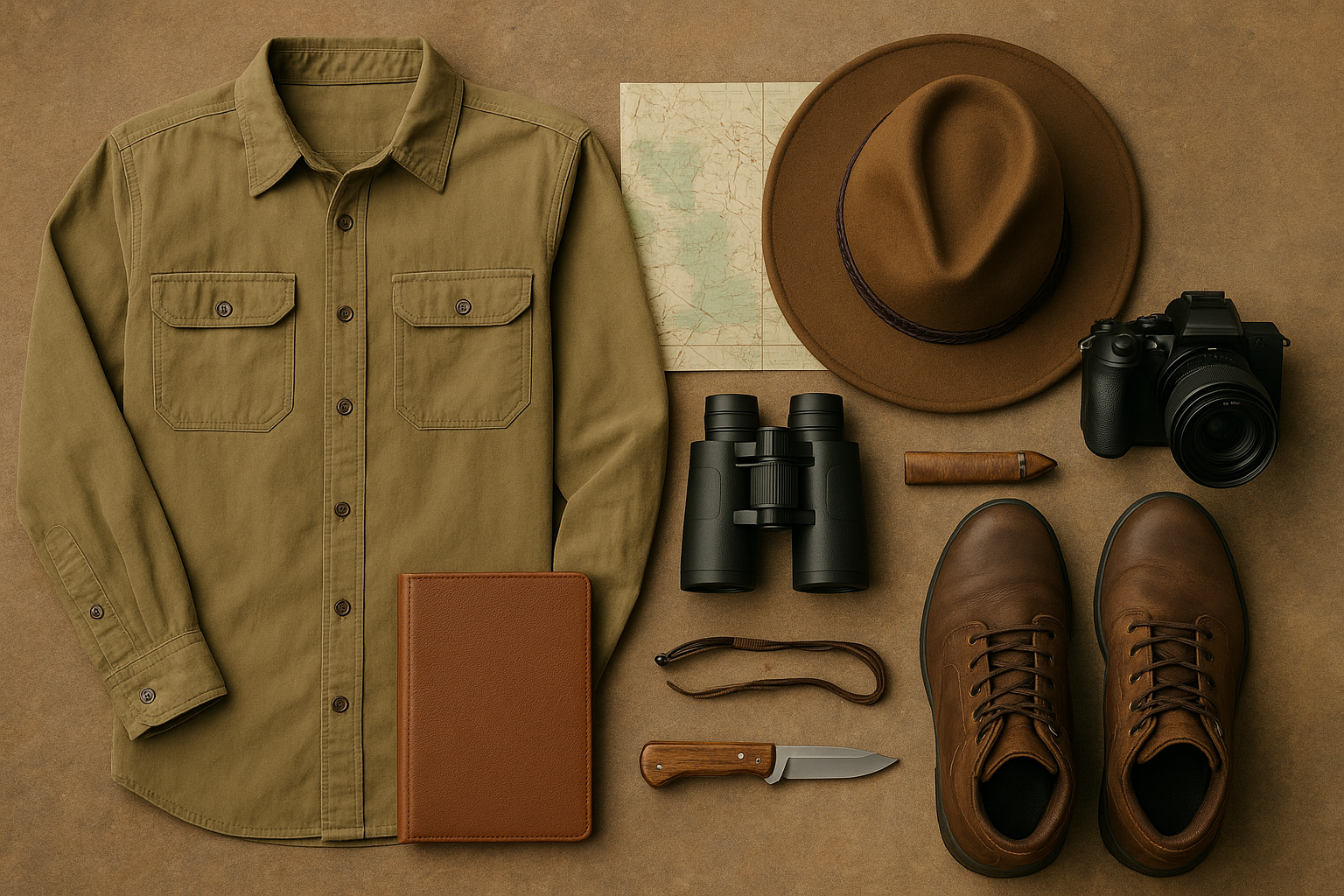
What to Pack: Neutral tones (khaki, olive, brown, grey) for game drives — avoid bright colors and black or blue, which attract tsetse flies. Layers are essential as mornings and evenings in Kenya can be surprisingly cold, particularly at altitude. A good pair of binoculars will transform your experience. Sun protection, insect repellent, and a quality camera are essential.
The Cultural Dimension: Beyond the Wildlife
To experience Kenya only through its wildlife is to miss half the story.
The Maasai remain one of the most recognizable and culturally vibrant peoples in East Africa — and their relationship with wildlife and land is profound and ancient. A visit to a Maasai manyatta (village) is not merely a tourist add-on; it’s a genuine encounter with a people who have coexisted with lions and elephants for generations. The best cultural visits are those run by communities themselves, where income flows directly to families.
The Samburu of northern Kenya have their own rich traditions, distinct from the Maasai, shaped by the drier, more demanding landscape they inhabit. Several lodges in Samburu offer genuine cultural programming rather than performative displays.
And then there is Nairobi — increasingly cosmopolitan, creative, and fascinating in its own right. The city’s restaurant scene, particularly around Westlands and Karen, has evolved dramatically over the past decade. The Karen Blixen Museum, set in the colonial farmhouse immortalized in Out of Africa, offers a poignant lens on Kenya’s complex colonial history. The Kazuri Bead workshops employ single mothers and produce some of the continent’s finest handmade beads. Nairobi, in 2026, is worth a day or two of anyone’s time.
Kenya vs. Tanzania: Which Safari Destination Is Right for You?
This question comes up endlessly, and the honest answer is: both are extraordinary, and the choice depends on what you value.
Tanzania’s Serengeti offers a larger, wilder, less developed experience — the Serengeti is genuinely enormous, and the southern migration circuit (calving season, January–March) is spectacular. Tanzania also offers the Ngorongoro Crater and the Selous/Nyerere ecosystem.
Kenya offers more concentrated wildlife viewing in smaller areas, better infrastructure and flight connectivity, shorter travel times between parks, a richer cultural dimension (particularly through the Maasai), and the combination of a world-class safari with one of the world’s best beach destinations at the coast.
Many first-time African travelers do both — a split Tanzania–Kenya itinerary following the migration is one of the great classic African journeys.
How to Book Your Kenya Safari
There is an overwhelming amount of information online about Kenya safaris — and an equally overwhelming number of operators. The difference between a mediocre safari and a transformative one often comes down to the expertise of the people who plan it and the guides who lead it.
Whether you want to witness the Great Migration, track rhinos on foot in Laikipia, watch elephants at Amboseli with Kilimanjaro at sunrise, or combine all of the above with a few days unwinding on Diani Beach, these agencies build the itinerary that makes it happen.
The most important step you’ll take is the first one: saying yes.
Ready to plan the safari you’ve been putting off? Check out some of the best lodges you can visit in Kenya — no obligation, just the beginning of something extraordinary.